
Tennessee Republicans Passed the Map. Now Watch How They Did It.
The special session moved fast for a reason: reject transparency, ignore the warnings, clear the room, and call it procedure.

A note before you read: This piece is built around video clips from Wednesday’s committee hearings and floor proceedings during Tennessee’s extraordinary session. The clips are not meant to replace the full record; they are meant to show the pattern. Full video sections are included at the bottom for readers who want to watch the proceedings in context.
They did it.
On Thursday morning, the Tennessee General Assembly voted to pass new congressional maps. By the time the votes were cast, the outcome felt almost predetermined. That may be the most damning part.
I told readers I would try to cover this extraordinary session day by day. I meant that. I wanted to walk through what happened each day, what moved, what failed, what to watch next, and what it all meant for Tennessee.
Then the session started moving faster than a normal person could reasonably follow.
By Wednesday night, a Day 2 recap already felt too small. The legislature had shown us the shape of the whole thing. On Tuesday built the track. Wednesday loaded the bills onto it. Thursday delivered the vote.
There was hope at the beginning. There always is, or at least there should be. People called. People testified. People drove to Nashville. People sat through hearings. People raised hell. People tried to make lawmakers look them in the eye before they split a community’s political power apart.
A democracy should leave room for that kind of hope. People should believe their voices can move a vote before it happens. They should believe testimony can pierce through a script. They should believe outrage can slow down a bad idea long enough for the public to understand it.
By Wednesday morning, that hope started running cold.
In the opening House floor session, when a Democratic member raised an objection or asked for clarification, Speaker Cameron Sexton brushed it aside with a line that sounded, in the moment, like a throwaway.
“This is the way it’s going to be.”
It sounded like impatience. A little here-we-go-again. A little reminder that the people objecting were, in his view, slowing down something already decided.
By the time the maps passed, that line sounded less like an aside and more like the thesis of the entire special session. This is the way it’s going to be.
The public can speak, but the timeline will not slow down. Democrats can object, but the bills will move. Witnesses can warn them what this does to Memphis, but the map will advance. People can protest, but the room can be cleared. Republican members can worry about what happens to their own counties, but the reported message behind the scenes was simple enough: vote for the map, or your county may be next.
That is how inevitability gets manufactured in public.
He was talking about the floor process. He ended up naming the whole thing.
Before most Tennesseans had even seen the final shape of what was coming, the first fight was already underway. It was not over a precinct line or a neighborhood or a county border. It was over the conditions under which the map would move.
Would the public get time? Would communities get hearings? Would lawmakers disclose who helped draw the map? Would there be a 72-hour review period? Would votes be recorded clearly? Would there be a real public explanation for why Tennessee was reopening congressional districts in the middle of the decade?
That was where the fight started. Around the machinery.
And the majority said no.
That is the part people miss when they only see the final map. Redistricting does not begin when the map appears on a screen. By then, some of the most important decisions have already been made. Someone decided the calendar. Someone decided the hearing schedule. Someone decided how much time the public would get. Someone decided whether the people most affected would have any meaningful chance to organize before the vote was already lined up.
The Map Wasn’t Public Yet. The Fast Track Was.

I’m keeping these day-by-day breakdowns free because Tennesseans need to see the process while it is happening. If you want to support the work it takes to track, clip, write, and explain this session in real time, you can become a paid subscriber here.
On Day 1, Democrats asked for more time, more disclosure, more public process, more accountability. The majority rejected it.
Then came Wednesday. And Wednesday was a conveyor belt.
On the Senate side, Republicans first had to reopen the door Tennessee law had closed. Before they could pass the map, they had to move the bill that allowed them to redraw congressional districts in the middle of the decade. That sounds procedural only if you ignore what came next. Before they could carve up Memphis, they had to change the conditions that made the carving possible.
Watch what happens there. The bill is presented as a change to Tennessee law. Then Dr. Sekou Franklin tells them what that change means. He warns them that the proposal is racially discriminatory, that it threatens voting rights, that it undermines election administration, that it targets Shelby County and Black voters in Memphis.
That is where the helplessness starts to settle in for people watching closely. You can hear the warning. You can understand the stakes. You can watch someone say what this will do. Then you realize the warning is being absorbed into the record like background noise before the next motion.
That is a very particular kind of anger. A kind that comes from watching government pretend to listen while refusing to hear.
The warnings kept coming.
The map was not the only thing being forced through the system. Election offices were being forced through it too. Candidate deadlines. Ballot preparation. Military and overseas voters. Local election administrators. Ordinary voters who would have to figure out, again, where they live politically because legislators in Nashville decided to move the ground underneath them.
A former Secretary of State warned them that election calendars are infrastructure. They are how voters know what to do. They are how election officials do their jobs. They are how candidates qualify, ballots get built, systems get programmed, and people trust that the process has not been bent around someone else’s political emergency.
Voter confusion is voter suppression.
That line should stick.
Confusion does not have to look like a locked door. Sometimes it looks like a calendar changed too late, a district line moved too fast, a ballot deadline squeezed too tight, a county office forced to redo work it had already done, a voter who thought they understood their district waking up to find out someone in Nashville decided otherwise.
Most people were not watching all of this happen. They were working. They were raising kids. They were taking care of parents. They were trying to pay bills, make dinner, get through the week, and maybe catch the headlines when they could. They were not sitting through hours of committee hearings. They were not tracking bill numbers from one room to another. They were not watching government machinery in real time.
And that is exactly where power likes to hide: inside procedure, inside calendars, inside committee schedules, inside language so dry most people do not realize their representation is being carved up until the blade is already moving.
The target was clear.
Memphis. Shelby County. Tennessee’s only Democratic-held congressional district, anchored in a majority-Black city with a long history of Black political power, was being split apart.
The map would move more than voters. It would divide a community. It would take political power that had been concentrated enough to speak and scatter it across districts designed to swallow it. It would slice through neighborhoods, churches, schools, organizing networks, family histories, and a city that has had to fight for every inch of political representation it has.
People should watch that clip because it cuts through every excuse offered afterward.
They were told this would fragment District 9. They were told this would dilute Memphis voters. They were told this would roll back power that Black Tennesseans fought for across generations. They were told it was a political act with racial consequences.
The moral center of this story is that they knew. They were told, and the machinery kept moving.
Then Democratic lawmakers asked the questions any lawmaker should be able to answer before voting to split a major city’s congressional representation. Is Memphis predominantly Black? How many districts will Memphis be split into? Who drew the lines? Was the public given input before the maps were finalized?
Watch what happened when Senator London Lamar pressed Senator John Stevens.
That clip is infuriating because it shows the emptiness underneath the certainty.
The sponsor could point to the map. He could say the map speaks for itself. He could say Shelby County is divided. He could talk around the questions. He could not, or would not, plainly answer basic questions about Memphis, the city at the center of the damage.
That exchange is the whole process in miniature. The outcome was treated as inevitable, while the people driving it refused to carry the burden of explaining it. They wanted the authority to divide a city without the responsibility of saying clearly what they were dividing.
The defense that emerged over and over was that this was about politics, not race.
Listen closely to that.
In House Finance, Speaker Sexton said the map was drawn using “population and politics.” No racial data he said. No incumbents paired, he said. Population and politics.
That is not the defense he seems to think it is.
They were saying the political outcome was the point. And when the political target is a district anchored in Black Memphis, the distinction between political harm and racial harm does not magically clean itself up because someone says “politics” into a microphone.
That clip shows how they want to launder the harm. They want to say they did not use racial data. They want to say they used politics. They want to act like that settles the question.
But in Tennessee, and especially in Memphis, politics and race do not live in separate rooms. You cannot target the political power of Memphis and then pretend the racial consequences are an accident. You cannot split a majority-Black city’s political voice and then hide behind the word “politics” as if that word washes the map clean.
They were defending power.
Through all of it, there was a tone. Smugness. Laughter. The unmistakable ease of people who knew where this was headed and seemed almost amused that anyone still believed the public might change it.
A laugh is not a statute. A smirk is not a vote. The process is the evidence. But power has a body language, and the body language in those rooms told its own story. The people steering this did not look burdened by the gravity of dividing a community’s political power. They looked comfortable. They looked pleased. At times, they looked entertained.
The argument is in the votes, the calendar, the rejected transparency rules, the committee movement, the ignored witnesses, and the questions dodged. The laughter simply tells us how little shame accompanied the act.
Then the public erupted.
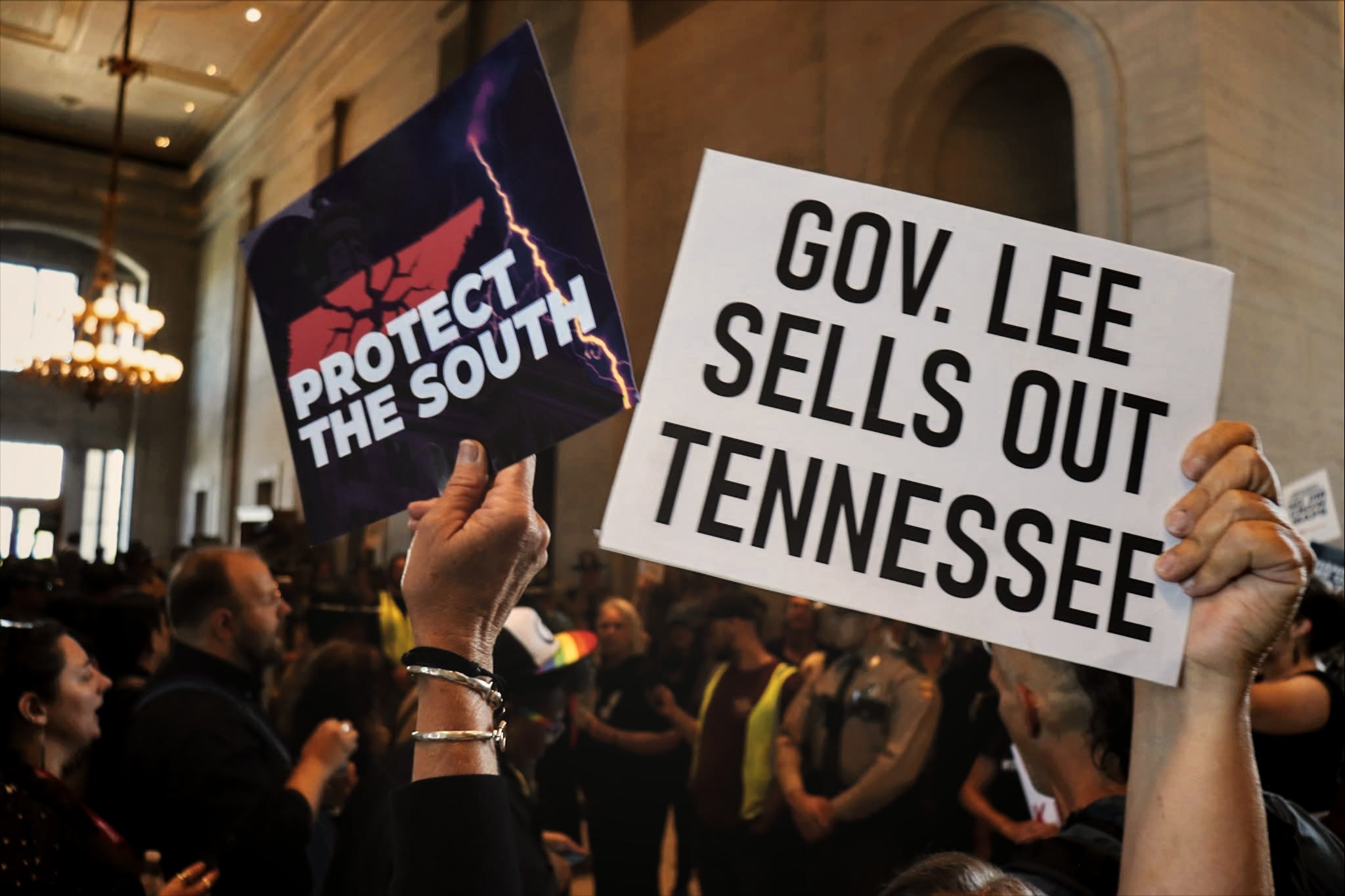
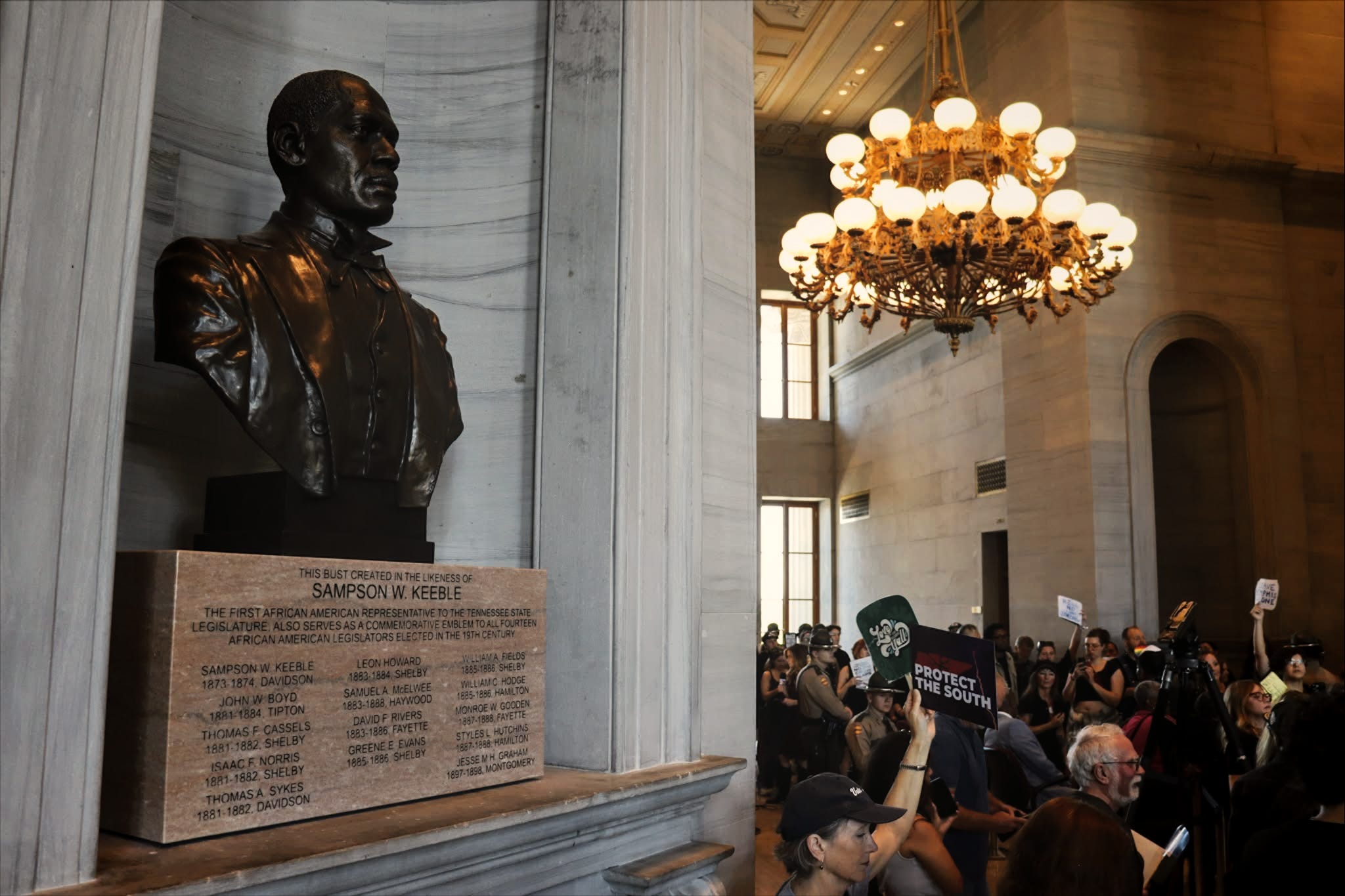
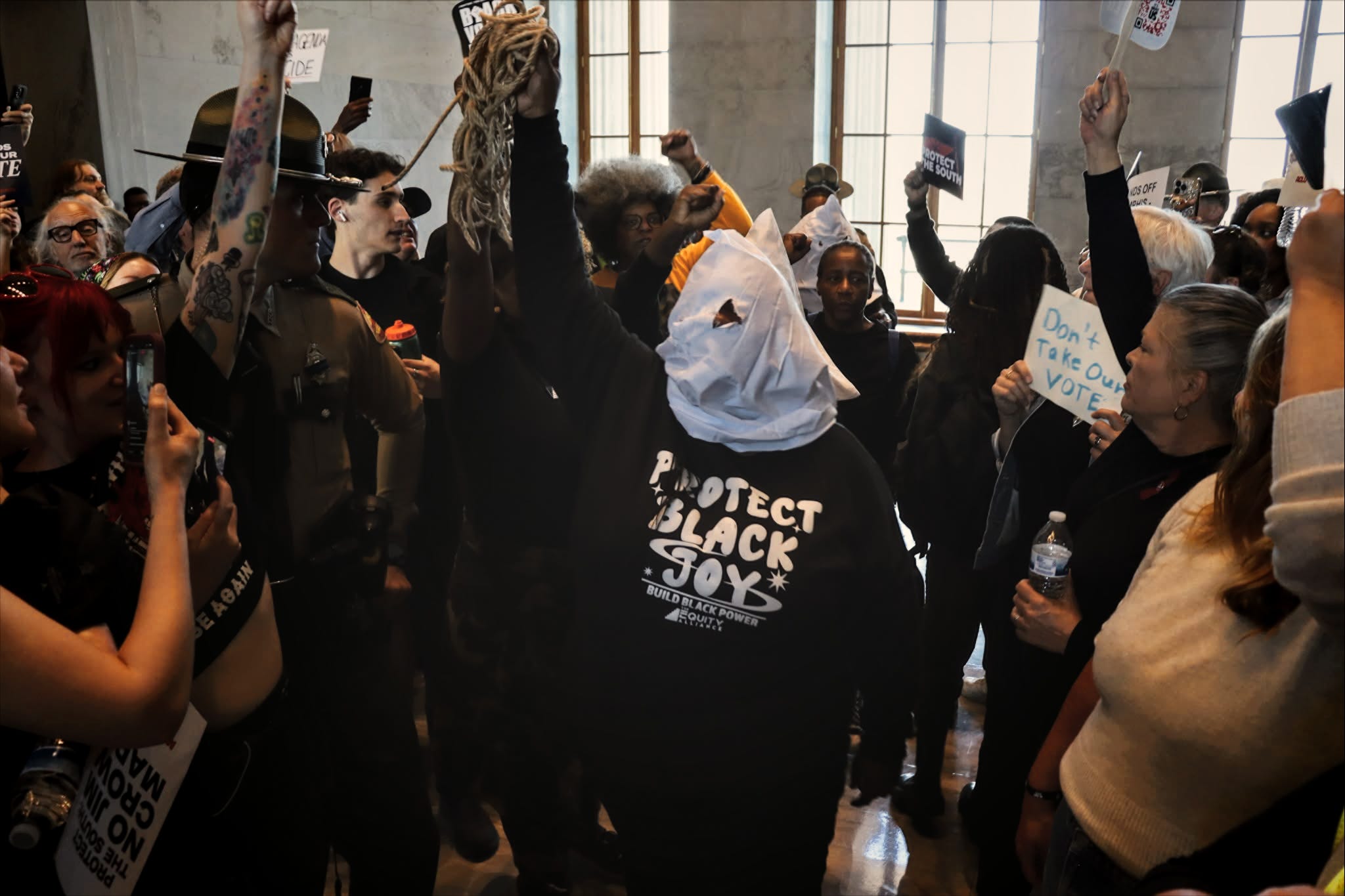
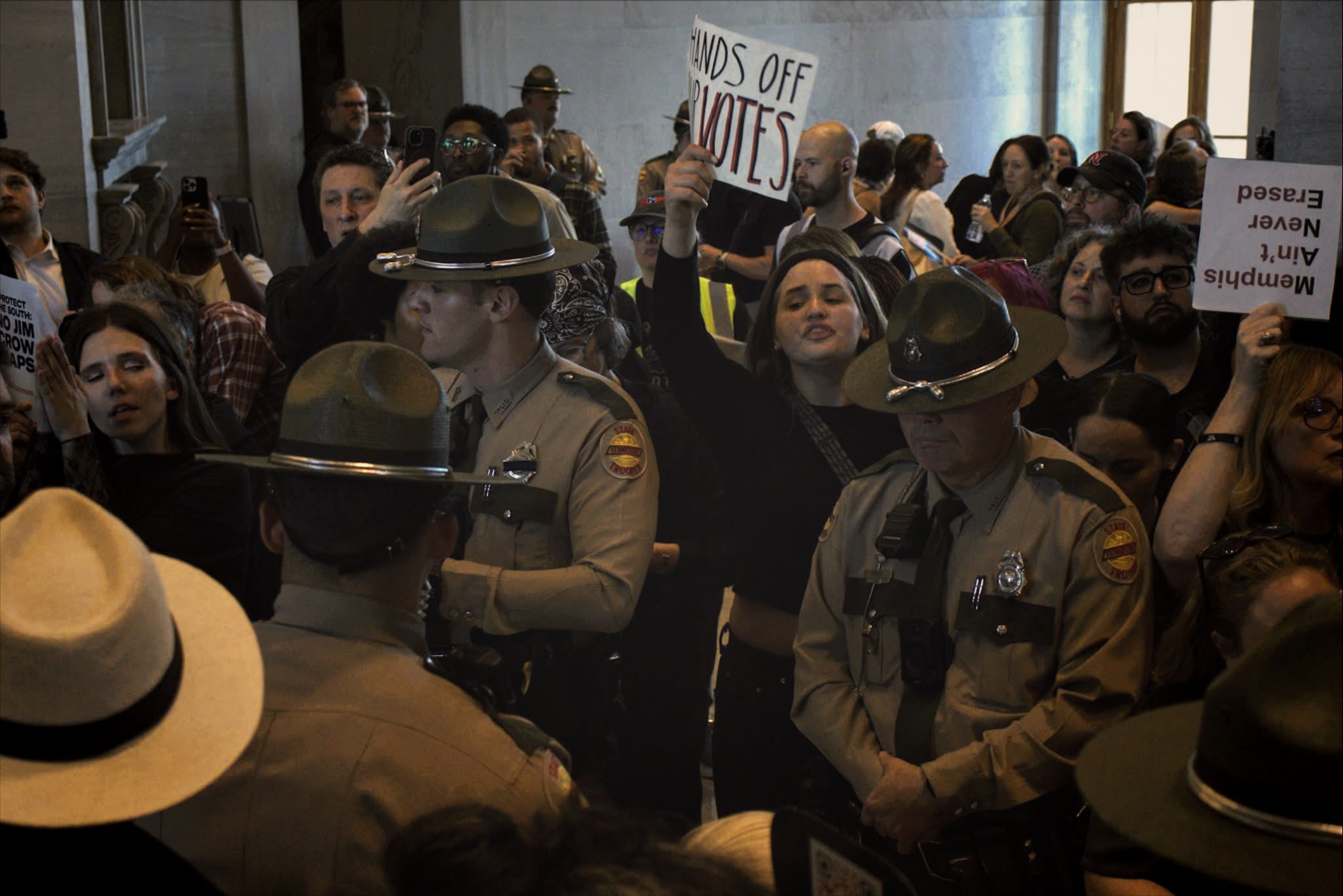
After the House Congressional Redistricting Committee advanced the map bill, the room was ordered cleared. The public protested. The Sergeant-at-Arms was told to clear the room. People chanted. People objected. People refused to quietly watch their government carve up representation and call it procedure.
And after the room was cleared, the committee kept moving.
That moment belongs in the center of the story. The public objected. Power removed the public. The process continued.
That is how a public process can remain technically public while becoming functionally closed. You can attend until your presence becomes inconvenient. You can speak until the calendar moves past you. You can object, but not slow anything down. You can protest, but the room can be cleared.
This is the way it’s going to be.
Then there is the pressure inside the majority itself. Multiple people close to the process have described the pressure campaign the same way: vote for the map, or your county could be next. I am saying that carefully because it matters. If that account is accurate, then the map was used not only against voters, but against lawmakers.
Representation itself became the threat.
Vote yes, or your constituents may pay the price.
That is darker than ordinary party discipline. It also explains the feeling of inevitability that hung over the session. The outcome was never inevitable because the arguments were strong. It became inevitable because the majority had the votes, controlled the rules, compressed the timeline, rejected transparency, ignored the warnings, moved each bill to the next room, and reportedly made clear to wavering members that resistance could bring consequences home.
By Wednesday evening, the map was on the runway for Thursday. The bills had moved through the committees they needed to move through. The calendar had been set. The time limits had been arranged. The destination was no longer hidden.
The vote was coming.
People could still be angry, but the process had already been arranged. Lawmakers could still give speeches, but the path had already been built. People could still call their representatives, but the vote was arriving on tracks laid from the first day.
So no, of course this isn’t a normal Day 2 recap. A normal recap would make this sound like a sequence of legislative events. That would be too generous.
On Day 1, the majority rejected the rules that would have slowed the process down and opened it up. On Day 2, they moved the map package through committee after committee. On Day 3, they brought it to the floor and passed it.
That is the story.


The map is the outcome. The process is the warning.
If a majority can call a special session, reject transparency, move a congressional map through multiple committees in one day, pressure members into line, limit debate, clear the room when the public erupts, and pass the map before most Tennesseans have had time to understand it, then public process becomes scenery.
That is what should make people furious.
Not only that they split Memphis. Not only that they targeted Black political power. Not only that they did it in the middle of the decade. Not only that they first had to remove the prohibition on changing congressional districts between apportionments. All of that is bad enough. The deeper outrage is that they showed us exactly how little public consent they believe they need.
They showed us that the calendar can outrun the people. The votes can ignore the witnesses. The majority can vote down sunlight. The threat can move behind closed doors. The room can be cleared.
And if anyone asks why it has to be this way, the answer has already been given.
This is the way it’s going to be.
That sentence should follow every lawmaker who made this happen. It should follow them back to their districts. It should follow them into town halls, candidate forums, county party dinners, church parking lots, and grocery store aisles.
Because this was never only about one congressional map. It was about what kind of government Tennessee has when the people in power decide the public is an obstacle to manage instead of a sovereign to answer to.
A healthy democracy does not fear time. It does not fear hearings. It does not fear disclosure. It does not fear recorded accountability. It does not fear citizens understanding a map before their representatives vote on it.
A healthy democracy can withstand public scrutiny. This process could not.
That is why they moved so fast. By Wednesday night, the public had seen enough to know that Thursday’s vote would not be the beginning of accountability. It would be the final step of an operation already underway.
And then Thursday came. They voted.
They passed the maps.
Now they want people to remember only the final lines. Don’t.
Remember the rejected rules. Remember the time they refused to give. Remember the witnesses they ignored. Remember the questions they would not answer. Remember the “population and politics” defense. Remember the cleared room. Remember the laughter. Remember the lawmakers who were reportedly warned that their own counties could be next.
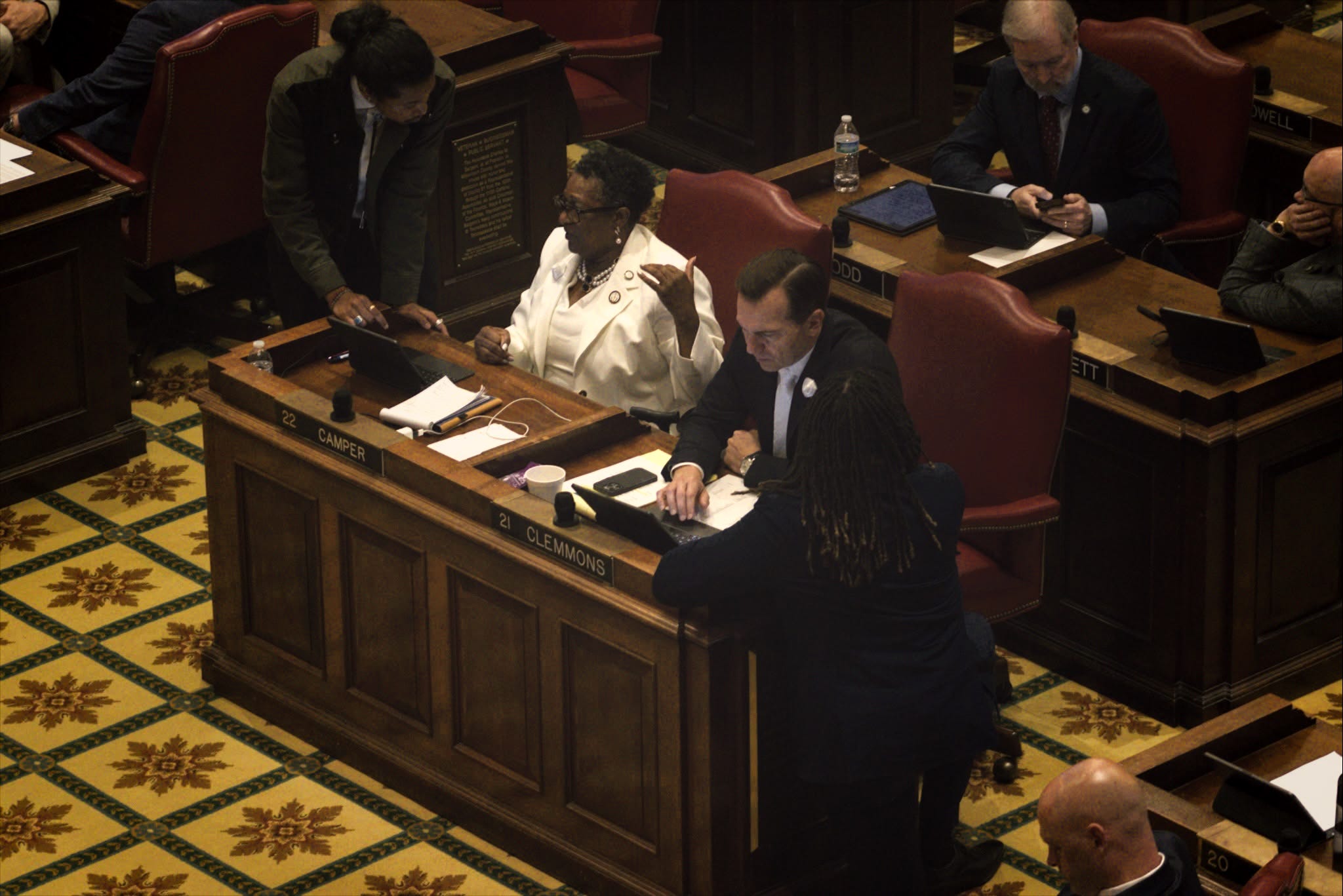
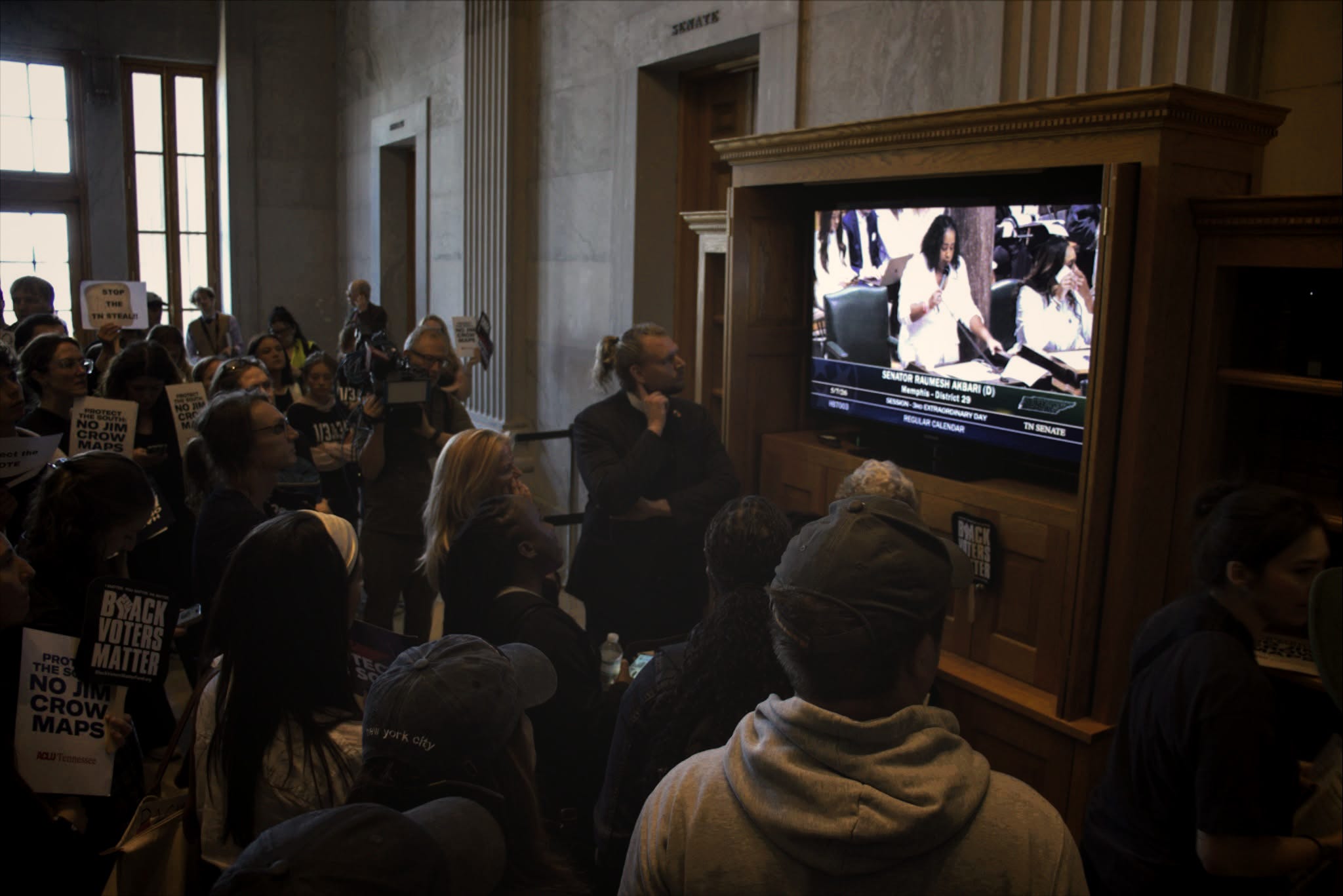
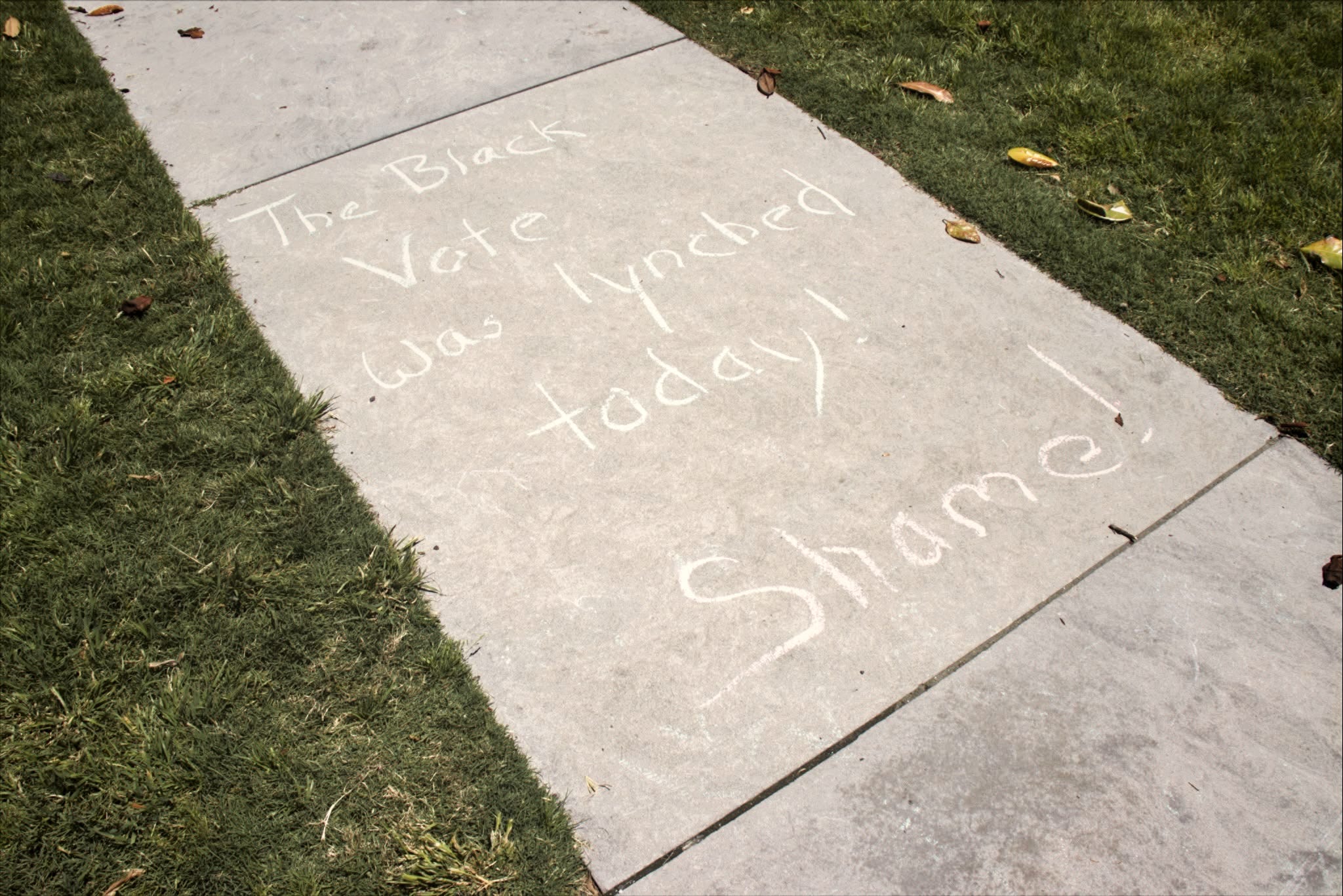
Remember that all of this happened in public, in committee rooms and on floor sessions, under the language of procedure.
That is how power behaves when it thinks the outcome is already locked.
And that is why the story of this special session cannot end with the map.
The map was the outcome. The process was the warning.
This kind of work takes time: watching the hearings, pulling the clips, reading the bills, and turning the machinery into something people can actually follow. If this helped you understand what happened, consider becoming a paid subscriber.
Full Video Record
For readers who want to watch the full sessions, I’ve included the full video sections below. The clips above show the core story. The full videos show the machinery around it.
Opening House Floor Session
The opening floor session where the House formally began the extraordinary session, took up initial procedural questions, and set the tone for how objections and clarifications from Democratic members would be handled during the redistricting push.
Senate State & Local Government Committee
The committee where lawmakers debated the bills allowing mid-decade congressional redistricting and changing candidate qualifying rules, with testimony on voting rights, election administration, military and overseas ballots, voter confusion, and the strain placed on local election offices.
Senate Judiciary Committee
The committee where lawmakers debated the proposed congressional map, including testimony from Memphis leaders and voting-rights advocates about splitting Shelby County, fragmenting District 9, diluting Black voting power, and whether the map was drawn for race, politics, or both.
House Congressional Redistricting Committee
The committee where lawmakers debated and advanced the congressional map package, including objections over the rushed timeline, public input, and the division of Memphis and Shelby County. This hearing also included the public protest, the room being cleared, and the committee continuing after the public was removed.
House Finance, Ways & Means Committee
The committee where lawmakers debated the fiscal and election-administration impacts of the map package, and where Speaker Sexton explained the map as being drawn using “population and politics,” not racial data.
Senate Finance, Ways & Means Committee
The committee where Senators debated the fiscal impact of the redistricting package, including costs to the state and counties, reimbursement questions, and the practical burden placed on local election officials by changing congressional districts during an active election cycle.
Senate State & Local Government Committee
The committee where Senators debated the bills allowing mid-decade congressional redistricting and changing candidate qualifying rules, with testimony on voting rights, election administration, military and overseas ballots, voter confusion, and the strain placed on local election offices.
Senate Calendar Committee
The committee where Senators moved the redistricting bills onto the Senate floor calendar, setting up final debate and passage after the bills had cleared the committee process.
Senate Floor Session
The floor session where Senators debated and voted on the redistricting package after the companion bills had moved through Senate committees.
Thanks for the explanation. What do you think about this perspective?
https://torrancestephensphd.substack.com/p/democrats-and-the-tennesssee-two