
The Smallest Room in the House
Republicans have trapped Democrats in symbolic fights while the real damage happens everywhere else. And too often, we answer with language too vague to meet the stakes.

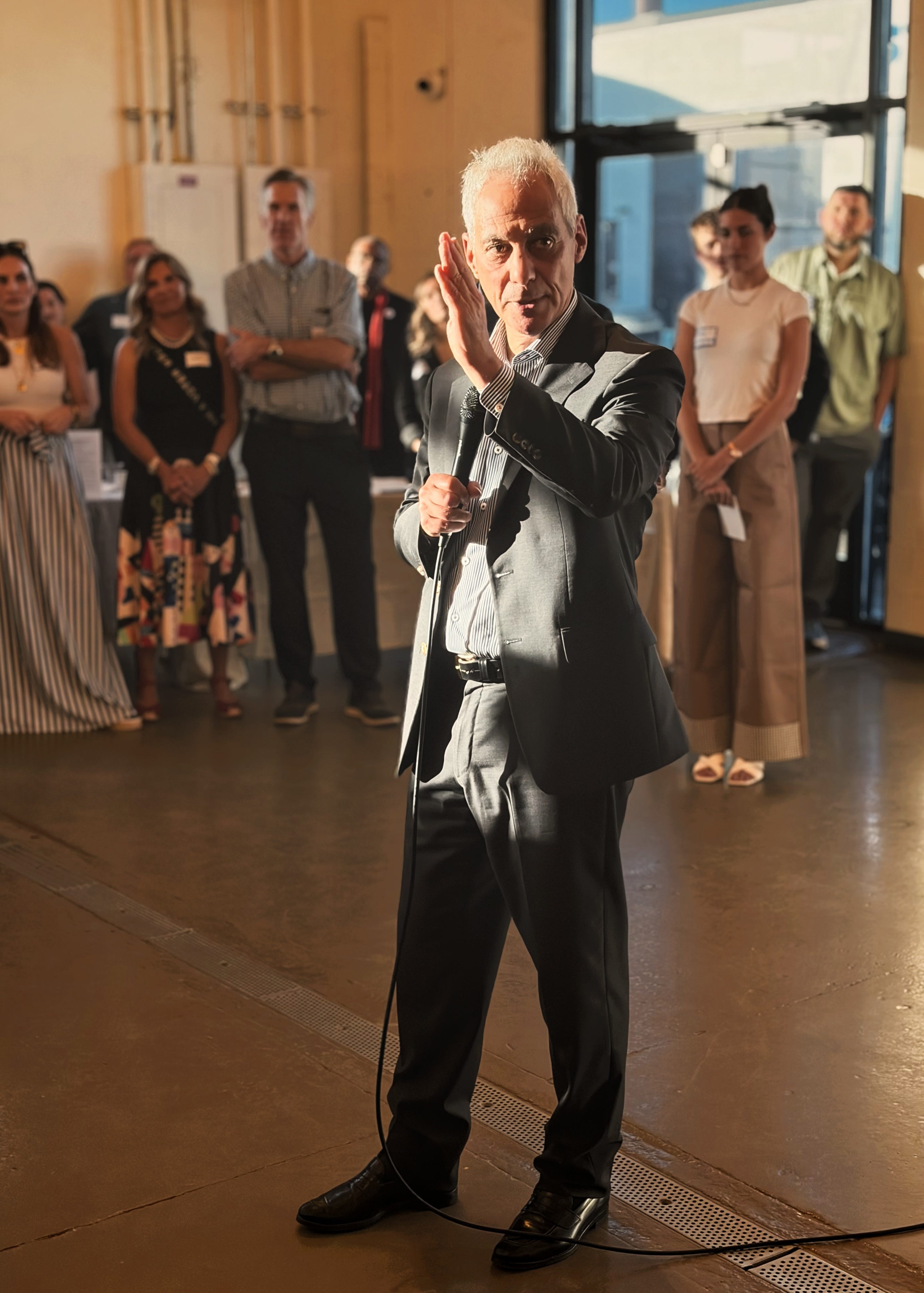
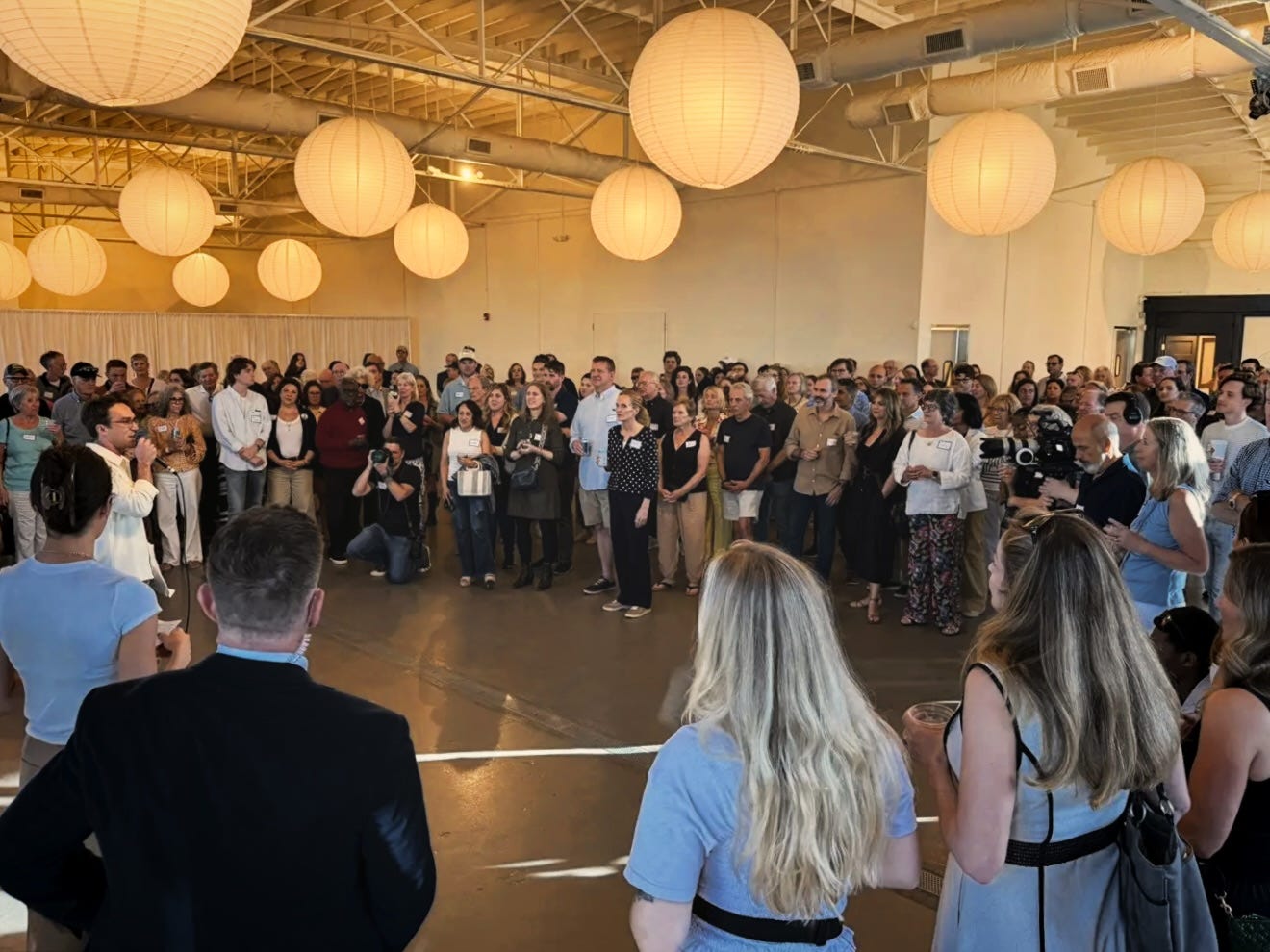
Last Friday night in Charleston, I stood in a room full of Democrats listening to Rahm Emanuel do what Rahm does.
I did not walk in looking for wisdom. His act feels tired to me. Too aware of itself. Too aware of how it wants to land. The kind of political performance that feels less like a conversation than an audition.
But one line stuck with me anyway. He was making his usual point about Democrats spending too much time on the “bathroom issues” (what Republicans want turned into a permanent national panic around trans people) and he called it fighting over the smallest room in the house.
And I sat with that longer than I meant to — thank you, I-40 construction — and the more I thought about it, the more I realized it gets at something deeper than campaign tactics.
It gets at a language problem Democrats have had for too long.
This is one I really want your thoughts on. Read it through, then leave a comment and tell me where you think Democrats are getting this wrong… or right.
Republicans are very good at trapping the country inside tiny, emotionally loaded, made-for-TV fights while the rest of their agenda moves quietly in the background. They want politics stuck in the smallest room in the house because that is where symbolism beats substance, panic beats policy, and outrage beats accountability.
If they can keep everybody staring at one more cultural panic, one more symbolic fight, one more shiny object designed to trigger the strongest instincts in the room, then maybe nobody looks around at everything else.
The cuts. The priorities.
The power grab. The way the pain always seems to move downward.
Maybe nobody notices the rest of the house.
That is the trap. But it is only half the problem.
The other half is what Democrats do when we try to pull the conversation back toward ordinary life. Too often, we reach for language so vague and overused that it drains the force out of the argument before it even starts. We say “working families,” “everyday Americans,” “the middle class,” and, of course, “kitchen table issues,” as if pointing to a category is the same thing as spelling out a conflict.
It is not. Because in politics, language is not decoration. It tells people where the fight is.
It tells people what’s at stake, who’s making life harder, and whether we actually understand the shape of their lives.
Republicans understand this better than Democrats do.
They tell their voters who to fear, who to blame, and what they are supposed to feel. They are specific. About the threat. About the target. About who their voters should blame.
Democrats, by contrast, often reach for language that sounds caring and responsible but is so generalized it barely moves anybody.
One side describes a fight. The other describes an atmosphere.
One side says: they are taking something from you.
Our side says: we care about communities.
One side lands a punch. Ours gestures at the room.
That is why I have come to think Democrats should stop saying “kitchen table issues.”
At this point, it is one of those phrases politicians use when they want the emotional credit for caring about ordinary life without the political risk of saying anything too specific.
It sounds grounded. Familiar. Safe.
It is also, more often than not, meaningless.
If a politician says they care about kitchen table issues, the next question should be immediate: which ones, and what is your plan?
Because “kitchen table issues” is not an agenda. It is not a governing philosophy. It is a placeholder. A way of gesturing toward the pressures of ordinary life without saying what those pressures actually are, what the tradeoffs are, or who is making them worse.
The rent is not a kitchen table issue. It is rent.
Childcare is not a kitchen table issue. It is childcare.
A school losing resources is not a kitchen table issue. It is your child’s school.
A hospital closure is not a kitchen table issue. It is a hospital closure.
A power bill you cannot afford is not a kitchen table issue. It is a choice between groceries, medicine, and keeping the lights on.
That is why vague language does more than just weaken the message. It weakens the analysis. It turns lived pressure into branding language. It makes politics sound like a posture instead of a struggle over real conditions.
And before anybody decides this is an argument for abandoning people, let me be clear about where I stand on that too.
I do not believe in leaving people behind to make a message more efficient.
I do not believe in treating vulnerable communities as politically inconvenient.
I do not believe rights are disposable as long as somebody’s consultant can show me a marginal gain in a swing district.
That would be cowardice.
But I do think Democrats have tied themselves into knots trying to explain every cultural fight in the most overqualified language possible when, in many cases, the core principle could be stated much more simply:
Government should leave people alone.
Live and let live.
Leave families alone. Leave private life alone. Leave people alone to exist without turning them into a nightly political emergency.
That is not abandonment. In a lot of cases, it is actually a stronger defense of freedom than the one Democrats have been offering. It is cleaner. Easier to understand. Harder to twist.
But there is also a line.
There is a difference between saying government should stay out of people’s lives and shrugging when government starts going after people’s lives.
There is a difference between pluralism and surrender.
Once the state moves from leaving people alone to targeting communities, stripping protections, policing families, or using public power to make examples out of vulnerable people, the line has been crossed.
At that point, the argument is no longer about tone. It has to be about power.
And if Democrats cannot hold both things at once (that government should stop micromanaging private life, and that going after communities is an obvious abuse of power) then we will keep sounding either evasive or unserious when what this moment actually requires is moral clarity.
So what does any of this mean in practice?
For ordinary Democrats, it means stop speaking in euphemisms. Stop repeating phrases that sound like they were built in a consultant lab. Stop answering every Republican provocation on their emotional terms.
Say what the issue is. Spell out the cost. Tell people the consequence.
If the issue is housing, say housing. If the issue is wages, say wages. If the issue is childcare, say childcare. If the issue is school funding, say school funding. And if Republicans are once again trying to drag everybody into one more synthetic moral panic, return to the principle and return to the cost: leave people alone… and while you are at it, stop making life more expensive for everybody else.
For candidates, the lesson is even harsher.
If you say “kitchen table issues” in a speech, you should be ready for the next question immediately: which issue, what is your plan, who is standing in the way, and what changes if you win?
Because voters do not remember atmospherics for very long. They remember what touched their lives. The bill that went up. The school that stayed open. The wage increase they felt. The prescription that got cheaper. The childcare payment that stopped crushing them. They remember the things that left a mark.
Build the whole message there.
Not around generalized concern, but around an actual conflict.
Don’t say, “I care about hardworking families.”
Tell people what you are going to do about rent.
Tell them what you are going to do about childcare.
Tell them how you are going to keep a rural hospital open.
Tell them what you are going to do when utility costs eat into every paycheck.
Tell them what you are going to do when Republicans try to distract from all of that by manufacturing one more culture-war spectacle.
A real answer has to fit in one breath.
Because we live in a moment where the stakes are not abstract anymore.
This administration’s budget priorities make that plain enough. More for defense. Less for the programs people actually use. Less for heating assistance, community investment, research, disaster help… all the ordinary, unglamorous things that make life more livable and keep communities standing.
That is why Republicans would much rather keep the country trapped in one more symbolic fight than let the conversation linger on who is losing help, who is losing investment, and who is being told all of that pain is just the price of seriousness.
That is also why the language we use matters.
If Democrats keep answering material harm with sentimental abstractions, we will keep underselling the danger of what is actually happening. We will keep sounding like we are describing a mood while the other side is carrying out a project.
And their project is to make government crueler, more ideological, more selective in who deserves protection, and less interested in helping people hold a life together.
That is what is at stake. Not whether Democrats can find a smoother slogan. Nor whether we can describe the fight clearly enough that people understand the rest of the house is under attack.
Maybe that is why the line has stayed with me.
Because Republicans know exactly what can be hidden in the smallest room in the house.
They know that if they can keep the country locked inside one more tiny, emotionally loaded, symbolic battle, they can keep people from looking around at everything else: the bills, the school down the road, the clinic trying to stay open, the grant that kept a town afloat, the program that made the month survivable.
They know that is where people lose sight of the rest.
Democrats do not need to abandon anyone to get out of that trap. But we do need to stop speaking in euphemisms. We need to stop confusing empathy with clarity. We need to stop acting as though broad phrases about ordinary life are a substitute for saying who is hurting people and how.
“Kitchen table issues” is not enough. Not anymore.
Not when the stakes are this real.
Because this is not a fight over language for its own sake. It is a fight over whether people can still afford a life. Whether government will leave them alone or go after them. Whether our politics will point to the people breaking the house apart or keep handing voters softer words for the damage.
The question is not whether Democrats care.
The question is whether we are willing to speak plainly enough to meet the moment… and sharp enough to make people see who is setting the rest of the house on fire.
If you value this work and want to help me keep doing it, become a paid subscriber to support Project Battleground.
Spot on! The more specific Democrats can be when addressing issues we all currently deal with, the more persuasive it will be and resonate with those hearing it.
Yes! That’s exactly what I’ve been thinking/saying for a long time. Every time I hear a politician or pundit say “kitchen table issues” I want to yell “what does that mean?” Be specific! Thank you