
Sixty Days to Prove the South Still Breathes
Inside Tennessee’s 7th District — where obedience meets defiance, and democracy remembers its pulse

On election night, I was at my grandparents’ house. The air conditioner had frozen solid, so the windows were open and the late-summer heat crawled through the screens. Eighty-four degrees has never felt more like punishment.
Polls closed at seven, and I spent the night lying on the landing at the top of the stairs, trying to catch a few drops of Wi-Fi from the router downstairs, refreshing the same Tennessee (dot) gov website again and again to watch the numbers crawl in.
This was the primary in Tennessee’s special election for Congress. The only congressional race in America this fall, election day set for December 2nd. One seat left open when Republican Mark Green resigned, a seat that stretches from Clarksville to Waynesboro, across counties Washington couldn’t find on a map if you drew them in red ink and circled them twice.
It’s the kind of district consultants write off, the kind pundits call “hopeless,” the kind the national party forgets exists until they need a backdrop for a photo op about rural broadband.
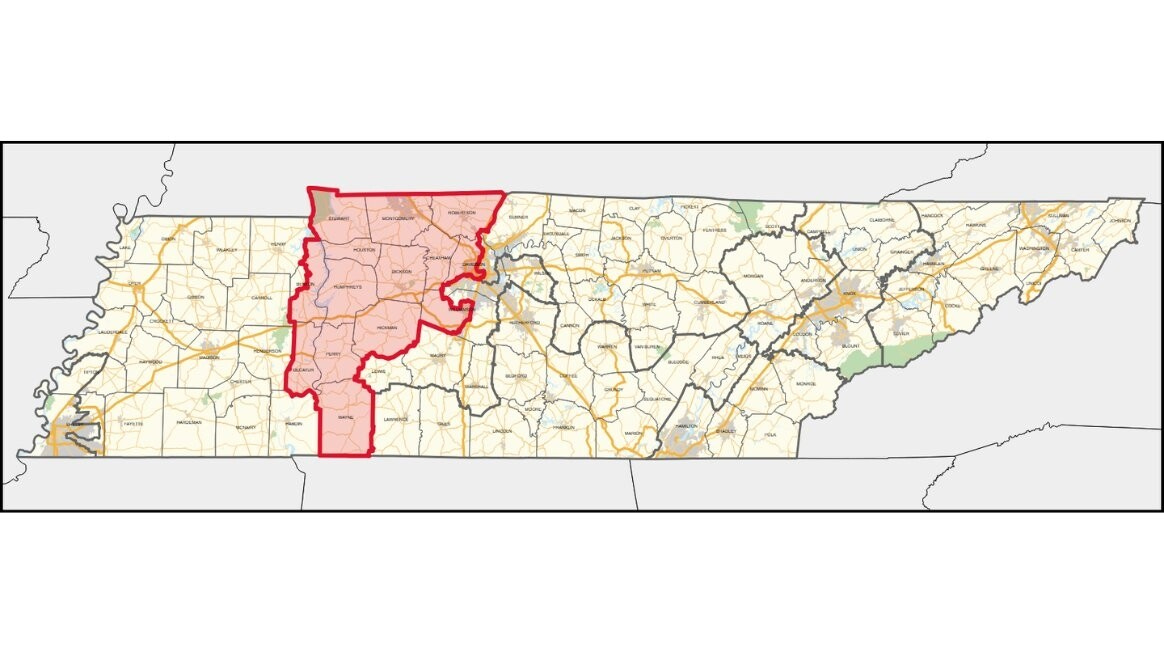
Trump carried it by fifteen points in 2020. In 2024, Republicans ran it up again. Fifty-nine and a half to thirty-eight. They call it unwinnable. Permanent. Dead territory for Democrats.
But here’s the thing about the South: nothing’s permanent, and nothing’s dead until working people stop fighting for it.
And now, for the first time in years, there’s an opening… a crack in the wall. The incumbent walked away and left a vacuum.
The kind of vacuum that either gets filled by courage or by corruption.
If you want to see which one’s winning, don’t look at the polling.
Look at the speeches.
The Soldier
(Franklin, Tennesse)
In Franklin, under fluorescent lights and a flag so large it nearly brushed the floor, Matt Van Epps took the stage. The flag wasn’t hanging; it was pinned flat to the wall as a backdrop, every crease pressed out. Order imposed on fabric. A symbol under command.
The crowd rose when he walked out. Veterans in ball caps, small-business owners, church deacons, all on their feet. They weren’t angry; they were hungry for steadiness. They wanted to believe a soldier could steady the chaos.
He gave them posture before he gave them policy. Chin high. Shoulders locked. The kind of stance that says: I know my place in the chain of command.
“Tonight,” he began, “you sent a message loud and clear. The people of Middle and West Tennessee stand with President Trump.”
The room cheered, but the order of his words didn’t sit right. Trump first. Tennessee second.
Then came the thank-yous. “First, I want to thank President Trump for believing in me. His endorsement made the difference.” He paused for applause. “Thank you to Congressman Mark Green, to Jim Jordan, to Governor Bill Lee, to Senator Marsha Blackburn…”
Only after that roll call of superiors did he glance toward the crowd and add, almost as an afterthought, “and thank you to everyone who helped us get here tonight.”
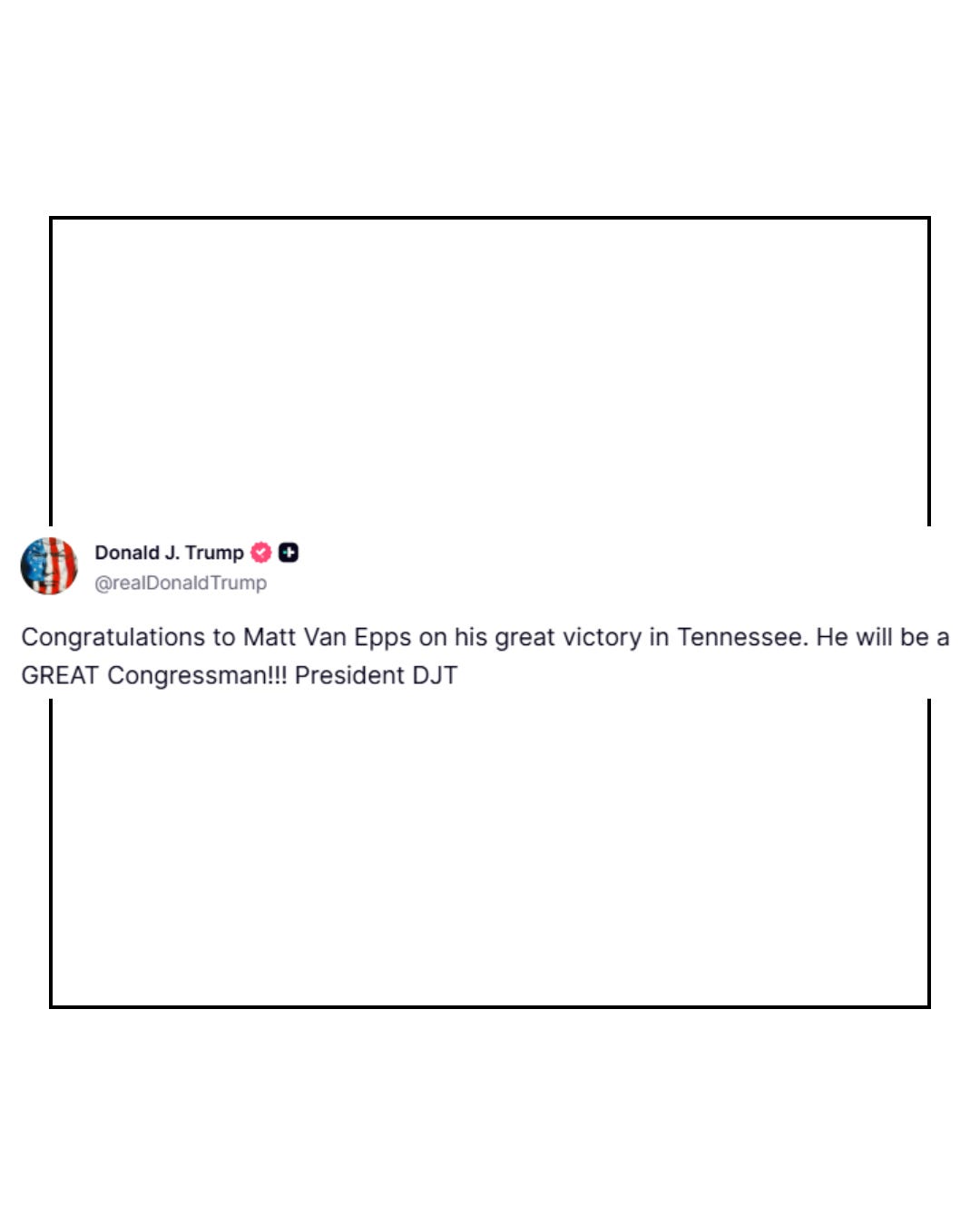
Everyone in that room had knocked doors, written checks, stood outside polling sites in the heat... but their names came last.
That’s a confession.
His campaign website calls him “battle-tested leadership.” His stump speech repeats the trinity faith, family, freedom as if obedience were a moral code. He talks about “securing the border,” “cutting Washington waste,” “standing with President Trump to take our country back.” Every line is a salute upward.
The more he spoke, the clearer it became: this wasn’t the language of service. It was the language of submission.
He said he’s fighting for freedom, but his idea of freedom is permission granted by the powerful to those who stay in line. He mistakes loyalty for virtue, obedience for courage, and Trump for the country itself.
Because when he says America First, he isn’t talking about the flood survivors in Waverly, the nurses in Lawrenceburg trying to keep their hospitals open, or the teachers in Centerville buying supplies out of pocket. He’s talking about Trump First.
That’s what hierarchy looks like when it trickles down: hospitals close, wages stagnate, decisions get made in rooms that people like us never enter.
Matt Van Epps isn’t running for Tennessee. He’s running for rank. A promotion from one uniform to another, from service to servitude.
And that flag behind him? Pinned to the wall just like he is. Held tight by someone else’s agenda, stretched thin to hide what’s really going on underneath.
The Organizer
(Clarksville, Tennessee)
A little bit north, in Clarksville, the air was thick with excitement… laughter, boots on old floorboards, the low hum of hope. Aftyn Behn didn’t stand in front of the crowd. She stood in it. Shoulder to shoulder with teachers, nurses, retirees, and students wearing campaign shirts smudged with sweat and Sharpie ink.
No flag pinned behind her. No podium separating her from the people she fights for. Just a mic, a barroom, and a roar that smelled like beer and democracy.
“It was a long shot when all we had was a mission, a few clipboards, and a lot of faith in the people of Tennessee,” she began… no preamble, no deference to party brass.
That’s Aftyn Behn in one line: faith in people, not power.
She thanked her volunteers who stayed late at HQ for that last voter you were trying to persuade, the staff who built this thing from scratch, and every county that opened its doors to a small but fierce blonde with a Jeep full of signs and a heart too stubborn to quit.
Then came Ms. Renee. A friend, not a prop. Denied TennCare medication after open-heart surgery, left behind by Trump-era Social Security cuts. “She reminds me that integrity still matters in politics,” Behn said, her voice catching just enough to make the room breathe with her.
Where Van Epps recites orders, Behn recites promises: show up, mean what you say, keep your word. She doesn’t give commands… she gives people jobs to do.
“They said a woman from the movement couldn’t take on the machine,” she told the crowd. “They said grassroots organizing can’t compete with corporate money. They were wrong.”
Because what she’s building isn’t a machine. It’s a coalition. Stitched together from church potlucks, PTA lists, union halls, and a dozen little counties that Washington forgets exist.
She doesn’t chant faith, family, freedom as a slogan. She lives it. Feeding kids is faith. Fixing roads is family. Funding hospitals is freedom.
Where Van Epps hides behind a flag, Behn carries one made of door-knocking routes and handwritten thank-you notes.
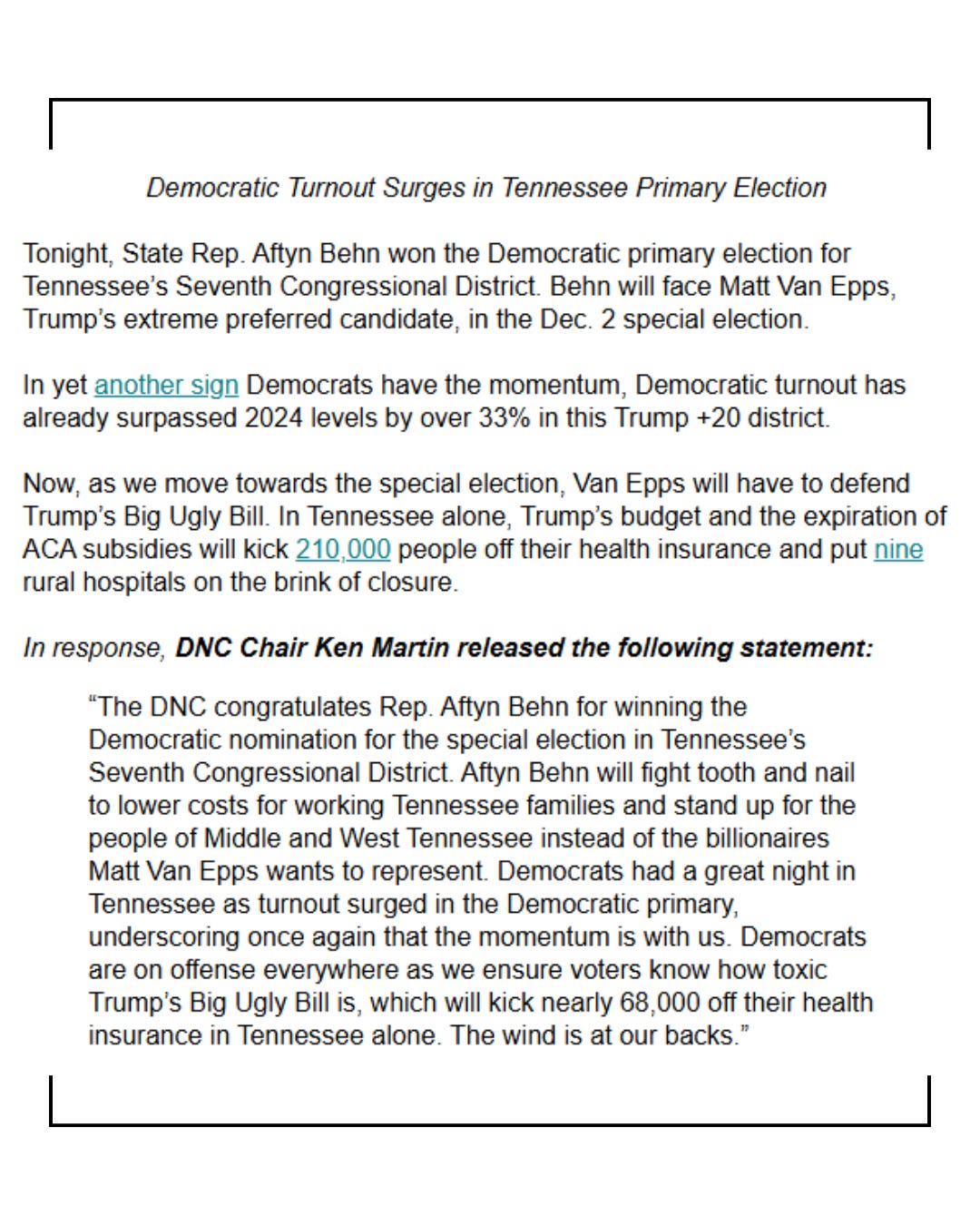
“For too long,” she said, “Tennessee Democrats have been told to moderate more, spend more, and hope for the best. But if that playbook worked, we’d already have a blue state.”
The room erupted… not polished applause, but something rougher and truer: relief. The sound of people remembering their own power.
Because this campaign isn’t a coronation. It’s a reclamation. A taking-back of democracy from marble halls to front porches, from consultants to neighbors.
Aftyn Behn isn’t asking for permission to fight. She’s reminding us we never needed it.
And for the first time in a long while, Tennessee sounded alive again.
Let’s talk about why this race matters. It’s not just for Tennessee, but for the country watching from a distance, half-convinced the South has stopped fighting.
Because politics runs on story, and the story they keep telling about us is surrender.
They say Democrats can’t win outside the cities. That organizing doesn’t work anymore. That it’s all culture wars and hopeless math. But they’re wrong. Every point Aftyn Behn cuts off that fifty-nine-to-thirty-eight margin is a crack in the myth of inevitability. Every volunteer who knocks a door in August heat, every neighbor who decides to show up anyway, proves the South isn’t silent. It’s been silenced.
If we make noise here, it changes more than one race. It changes how power calculates. It changes what’s considered possible. It changes the story we tell about ourselves.
Because hope isn’t a mood. Hope is movement. It’s the act of working when no one’s watching, the discipline of refusing to give up what you love.
And we’ll need it, because this isn’t normal politics anymore. Reporters have been arrested. Judges’ homes have burned. Protesters tracked, teachers threatened, public servants purged for speaking plain truth. The government is learning to reward obedience and punish honesty. That’s not partisanship. That’s authoritarianism in plain sight.
But that’s exactly why showing up still matters. Every porch conversation, every small-dollar donation, every hour spent organizing is an act of defiance. What we’re building in these counties and classrooms and church basements is bigger than a campaign. It’s a living defense of democracy. It’s how ordinary people outwork tyranny.
This moment demands more than belief; it demands participation. It demands that we fight for every county, every classroom, every soul who still believes decency can win.
If you live near Clarksville, Erin, Waverly, or Lawrenceburg, plug in. Ask what organizers need. Give what you can. Because this isn’t just about one seat. It’s about whether neighbors still stand up when the powerful tell them to kneel.
If you’re ready to help, visit aftynforcongress.com to volunteer or donate, and follow Aftyn on Instagram, Facebook, Twitter and TikTok. Or here on Substack.
And if you want to follow this fight all the way through December, you can follow us right here on Substack. This is where we’ll tell the story as it happens. The organizing. The energy. The heartbreak. The hope.
We don’t have the luxury of waiting for someone else to fix it. The countdown has already started.
Sixty days to prove the South still breathes. Sixty days to turn obedience into defiance, and defiance into change. Sixty days to remind the powerful that no matter how loud they shout, they still don’t own us.
When they call it impossible, we call it the starting line.
Let’s get to work.