
Not a Group Chat. A Curriculum.
The kids are not alright, and they’ve been taught that cruelty is leadership.

I think it’s easy to pretend culture is a sideshow. We treat tone like window dressing instead of direction. We ask, “Who cares about the tone?” while focusing on whether we won the vote. But tone isn’t decoration. Tone trains.
And this month, we saw what the next generation of Republican leadership has been trained to sound like.
In more than 2,900 pages of Telegram messages obtained by Politico, leaders of Young Republican chapters in New York, Kansas, Vermont, and Arizona (many already working inside government) filled a private group chat with bile and violence. They called Black people “monkeys” and “watermelon people.” They joked about rape and torture. They wrote, “I love Hitler,” and “Everyone that votes no is going to the gas chamber.” They tossed around “f-g” and “r-tard” more than 250 times.
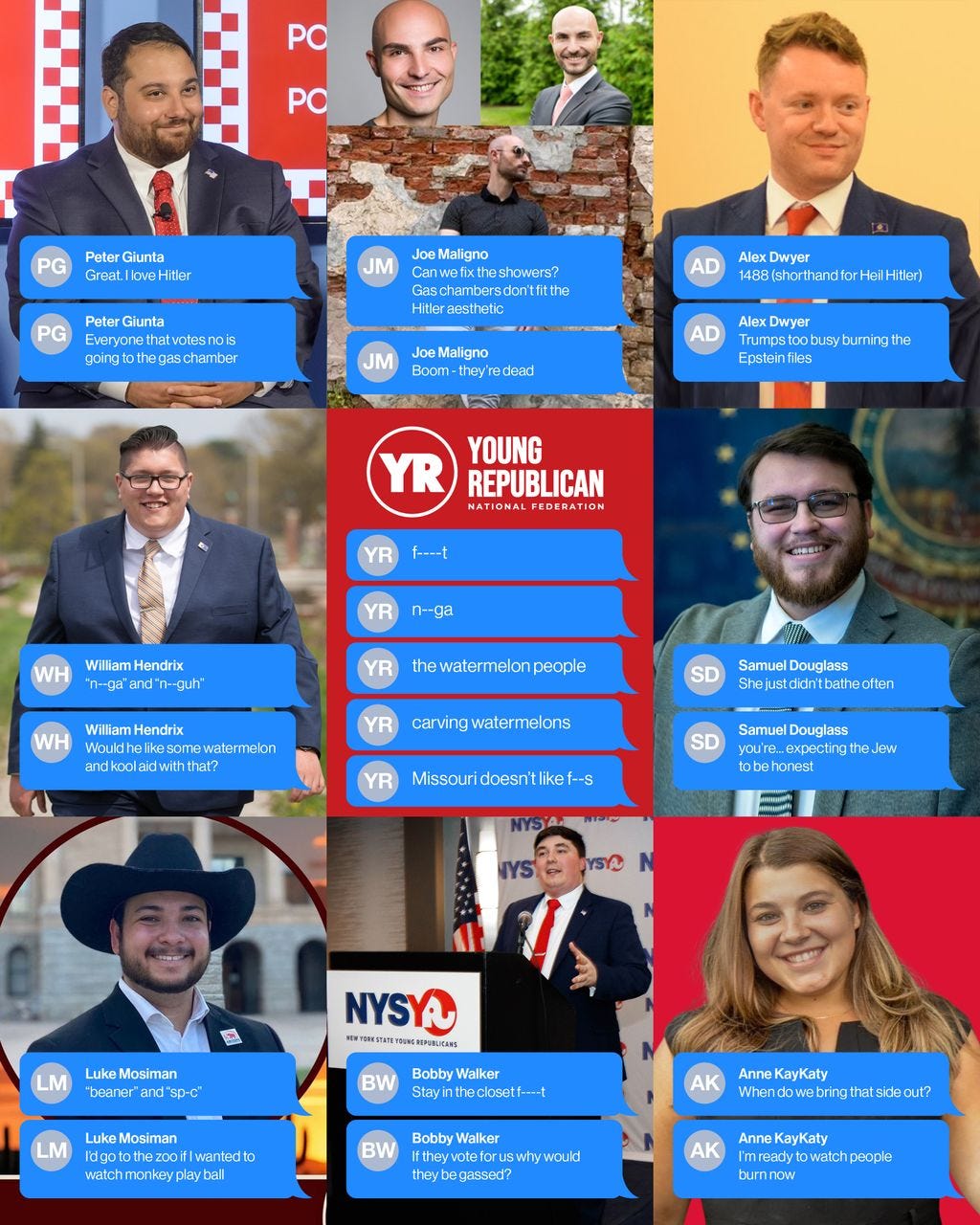
Politico described the leak as a window into “how a new generation of GOP activists talk when they think no one is listening.”
This isn’t some fringe message board. This is the political farm system.
These weren’t anonymous trolls. One was a state senator from Vermont. Another, a chief of staff to a New York assemblymember. A third, a senior adviser inside the Trump administration’s Small Business Administration. This is the future bench of Republican politics. Already rehearsing cruelty as bonding, sadism as loyalty, and dehumanization as humor.
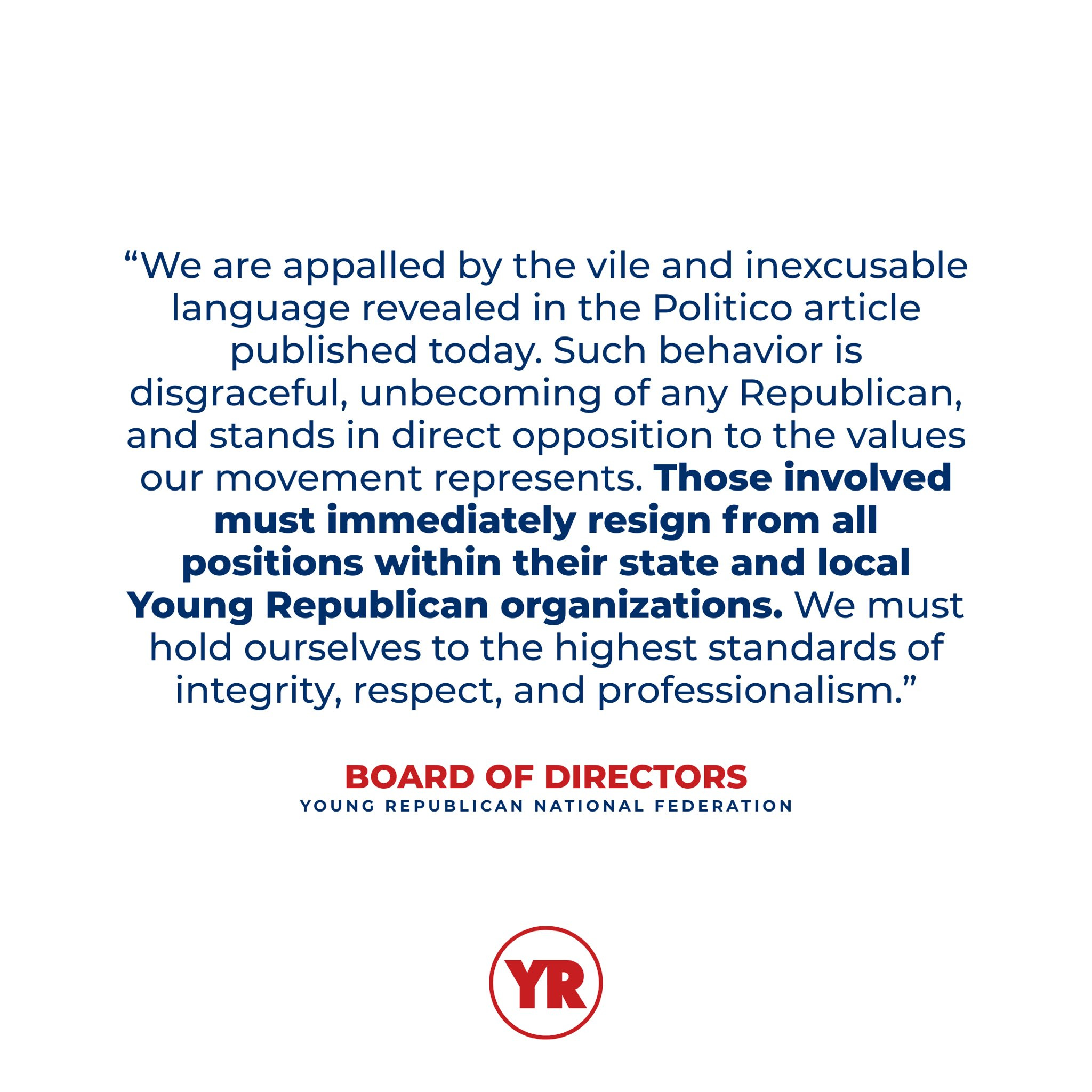
When Politico published the leak, the fallout was immediate. Firings. Resignations. The Kansas Young Republicans shut down entirely. The national Young Republican Federation called the language “vile” and demanded those involved step down. Forbes tracked the aftermath as jobs vanished and state chapters dissolved, while The New York Times called the episode “a firestorm putting Republican leaders on the defensive.”
JD Vance dismissed the outrage as “pearl clutching.” On social media he wrote, “I refuse to join the pearl clutching when powerful people call for political violence.” But these weren’t college kids blowing off steam. They were officials in power. The “college group chat” defense collapses under its own cynicism.
When the powerful laugh about gas chambers, they’re not joking — they’re rehearsing.
I think we should care about that. I think we should care about language, and not because we expect politicians to be saints, but because language is the on-ramp to power.
We don’t elect presidents to be pastors. Plenty of leaders have been crude. Lyndon Johnson bragged about things that could curl wallpaper. Coarse isn’t the problem. Cruel is. Cruelty masquerading as strength is how democracies rot from the inside.
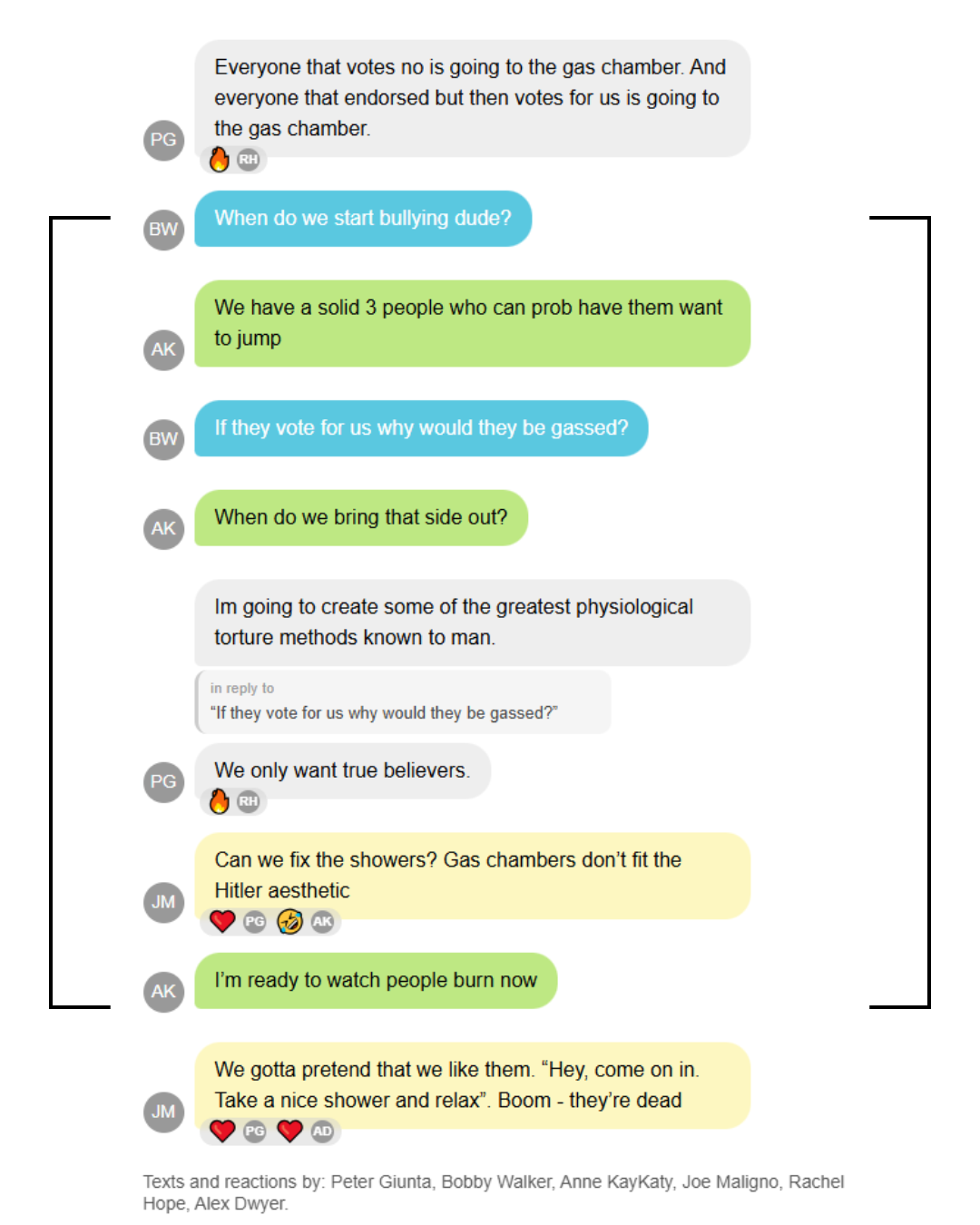
When young operatives spend their nights fantasizing about extermination, using slurs as punctuation, and joking about “rape” as “epic,” they’re not just being edgy. They’re practicing permission. They’re creating a moral permission structure where other people’s lives are props. And practice becomes policy.
Politico’s reporters noted that “racist, antisemitic, and violent rhetoric circulated freely — and that the Trump-era loosening of political norms made such talk feel less taboo among those positioning themselves as the party’s next leaders.”
If “gas chamber” is a punchline in private, what happens when those same people write laws about prisons, school curricula, or parole boards? What happens when they decide who gets a business loan, or which hospital in a poor county stays open? Jokes draw the circle of concern; policy enforces the circle.
I think we should stop pretending this just happened. It didn’t.
For nearly a decade, the loudest bullhorn in their world has been teaching cruelty as a virtue.
“Punch back.” “Enemies of the people.” “Poisoning the blood.”
The New York Times noted that the leaked messages “mirror the rhetoric that has become common in Trump’s public discourse.” Donald Trump didn’t invent American bigotry, but he did license it. He made dehumanization feel like a show of strength. He told his followers that empathy is weakness and ridicule is leadership.
So when a generation of Republicans now jokes about slavery, gas chambers, and “burning people alive,” they’re not betraying their training. They’re demonstrating it.
Trump didn’t create it. He normalized it. And now it’s metastasizing.
I think we should take this seriously because it’s not just about a few grotesque people losing jobs. It’s about what the next ten years of power will look like if we don’t. These young Republicans aren’t outliers; they’re the talent pipeline. They staff campaigns, legislative offices, and state agencies. They’re learning how to govern, and what they’re learning is that mockery equals strength, that domination equals respect, that laughing at someone’s humanity is a bonding exercise.
And when sunlight hit, we saw the script play out like it always has.
Apologies couched in self-pity: “The messages may have been doctored.”
Excuses written like memes: “We were joking.”
Defensiveness disguised as irony: “If we ever had a leak, we’d be cooked fr fr.”
They knew. They always know.
I think we should stop letting “just jokes” launder fascism. Because these aren’t jokes. They’re hierarchies in miniature.
And yes, I think we should also be honest about how it festers. It’s not just Trump. It’s the media grifters who monetize outrage and call it “owning the libs.” It’s the donors who fund whoever promises to “fight.” It’s the institutions that shrug and quietly reassign instead of fire. Every time cruelty gets rewarded, the circle of concern shrinks a little more.
Leadership isn’t just votes and budgets. Leadership is standards.
When a movement drops its standards, the floor becomes the ceiling.
I think we should demand better, but not performatively, structurally.
Resignations, not reassignments. Disqualification from youth leadership roles until there’s real repair and accountability. Donors and PACs cutting off anyone who traffics in dehumanization. And reporters, stop printing “taken out of context” without asking: What kind of context makes “I love Hitler” acceptable?
But the deeper fix isn’t theirs. It’s ours.
If we’re serious about rebuilding civic life, we need our own counter-pipeline. One that teaches courage as service, not spectacle. One that tells young people that power exists to protect, not to perform. We need organizers, teachers, and local leaders who make decency a practice as deliberate as cruelty has been made on the other side.
America isn’t saved by clever insults or viral outrage. It’s saved by people who hold the line for one another when cynicism says not to.
The kids are watching. The kids are learning.
Let’s teach them something worth inheriting.