
The Motion Was Narrow. The Fallout Was Not.
How the Tennessee Democratic Party’s removal of Treasurer Carol Abney turned from a records-based internal dispute into a much larger public war over secrecy, trust, and control of the story.

For weeks, the Tennessee Democratic Party’s removal of its Treasurer had unfolded the way too many internal party fights do: part official statement, part leaks, part Facebook war. Then the blowback arrived.
What is usually a routine call between state party leadership and county parties became a pressure valve for weeks of distrust, confusion, and pent-up grievance. Chair Rachel Campbell opened with a statement, then opened the floor.
And for the next 45 minutes, she absorbed the fallout.
Some of the anger was about the decision itself. Some of it was about how little had been clearly explained. Some of it was about executive session, confidentiality, and whether “process” had become a shield for silence.
But by then, the room was no longer reacting only to the Executive Committee’s March 16 action. It was reacting to the vacuum around it: the leaks, the fragments, the side narratives, and the widening sense that the party had failed to explain a serious internal action before others explained it for them.
People were no longer just asking what had happened inside the Executive Committee meeting. They were asking whether they trusted the people leading the Tennessee Democratic Party to tell them plainly what had happened at all. One county party chair crystallized that atmosphere in a single line:
“I don’t trust you, Chair Campbell.”
That was the point at which the fight became a fight over credibility, and over who got to define the meaning of what had happened.
By the time that county-party call arrived, the conflict had already widened well beyond the narrow basis the Executive Committee would later point to in its motion. Public denials had been made. Allies had cast the matter as secrecy, suppression, and an unjust process carried out behind closed doors. Leadership, meanwhile, had allowed “executive session” to become the most visible fact in the story, rather than the narrower rationale the body says it acted on.
The issue was no longer just what the Executive Committee had done. It was whether leadership had lost control of the story long enough for everyone else to begin arguing over a different one.
What follows is based on interviews with more than 20 people, including members who voted for removal, members who opposed it, and others familiar with the process. In many cases, those conversations differed sharply in tone and conclusion. But some patterns repeated often enough to become difficult to ignore.
Carol Abney and Jordan Wilkins were both asked for comment and did not provide one.
This piece does not attempt to adjudicate criminal liability or independently prove every contested fact in dispute. The Tennessee Democratic Party is not a court, and the action it took was not framed as a legal determination.
Instead, this piece reconstructs, as precisely as possible, the narrower case supporters of removal say was actually before the body: the one reflected in the motion, the grievance materials, the accounts of members who voted, and records reviewed for this story. It also examines how that narrower case was overtaken in public by a much broader fight about secrecy, trust, and party dysfunction.
By the time most Democrats encountered this story, they were no longer reacting to a single, clearly defined internal action. They were reacting to a layered narrative: part official record, part selective disclosure, part personal defense, part accumulated frustration with the party itself. Those layers are not the same thing, and one of the central problems in this dispute is that they have been treated as though they are.
The most important fact in this dispute is also the one most easily lost in the backlash: the party’s own motion was narrow.
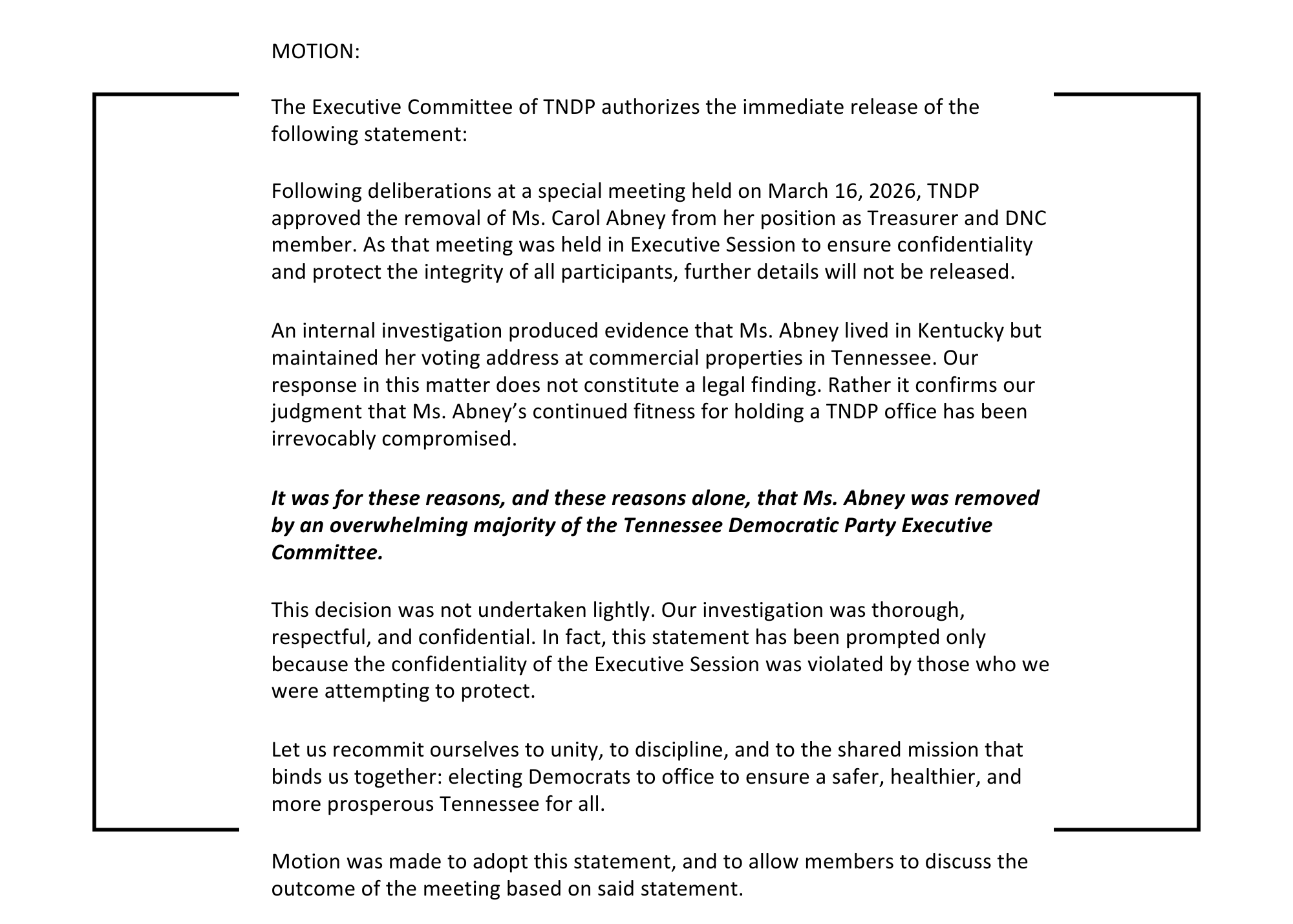
The adopted statement did not describe a sprawling cloud of every allegation, whisper, feud, or grievance that later attached itself to the fight. It described something specific. According to the motion, an internal investigation “produced evidence” that the Treasurer “lived in Kentucky but maintained her voting address at commercial properties in Tennessee,” and that her “continued fitness for holding a TNDP office” had therefore been “irrevocably compromised.” She was removed, the motion said, “for these reasons, and these reasons alone.”
The motion also made another point explicit: “This response does not constitute a legal finding.” It does not purport to resolve every allegation later pulled into the public fight or claim criminal guilt. It sets out the formal basis on which the body says it acted.
That narrowness matters even more once you understand what the State Executive Committee actually is.

Under the party’s bylaws, the Treasurer is one of the party’s officers, and any officer may be removed “for malfeasance or incapacity by a majority vote of the total Committee membership.” The SEC was not acting as a court, but as the party’s governing body exercising a power the rules expressly give it.
As multiple supporters of removal described it, the question before the body was not whether it could convict anyone of a crime. It was whether there was enough before it, under the party’s own rules, to conclude that the Treasurer’s continued fitness to hold TNDP office had been compromised. Treating an internal officer-removal motion like a criminal case invites demands the SEC was never claiming to satisfy: courtroom procedure, exhaustive adjudication, a formal legal finding.
If the motion is the public-facing narrowing document, the grievance materials help explain the narrower case supporters of removal say was actually before the body.
Materials reviewed for this story show that the case did not present itself as an open-ended trawl through every rumor surrounding the Treasurer. It defined a scope. The grievance subcommittee’s task, as laid out in its own materials, was to examine eligibility for three roles: State Executive Committee member, Tennessee representative to the Democratic National Committee, and TNDP Treasurer. Its stated methodology was specific: property records, voter-registration records, party and DNC rules, mapping tools, audio recordings, and internal communications.
The grievance materials cut against one of the easiest public stories to tell about this fight: that the party acted on gossip or a shapeless swirl of accusations. Whatever criticisms can fairly be made of the process, the case supporters of removal describe was more structured than that. It began with an anonymous complaint alleging that the Treasurer was not a Tennessee resident, said she had been living in Kentucky “for some time now,” and warned that if the party did not act, the matter would be taken to outside authorities. From there, the case presented to members turned on records, address history, and timing.
Materials reviewed for this story, along with interviews with members familiar with the process, show that the case presented to the Executive Committee centered on Tennessee voting addresses tied to commercial properties, including 167 East Lake Avenue and 111 Theater Drive in Celina; property classifications and parcel history; voter-registration timelines; and questions about when residential living quarters were added to one of the Tennessee properties. The materials also referenced a Burkesville, Kentucky residence at 906 Pruitt Road as relevant to domicile and fitness for office.

Street-level imagery of 167 East Lake Avenue from 2014 and 2018, one of the Tennessee addresses cited in the grievance materials.

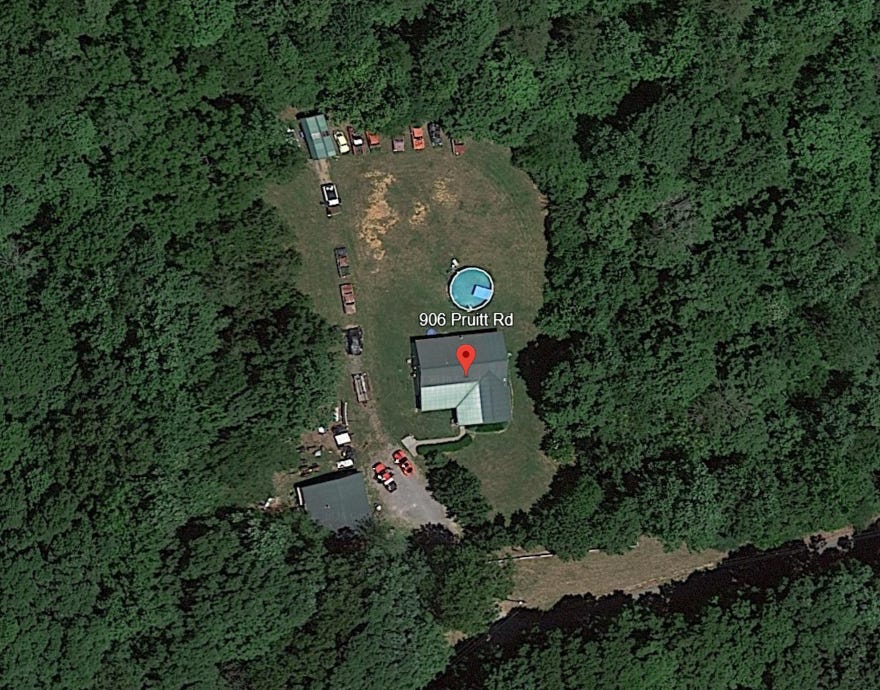
The grievance materials further relied on a 2022 tax reappraisal for 111 Theater Drive showing zero residential units or improvements and on July 2023 Street View imagery that, in the subcommittee’s telling, showed no visible residential conversion at that time. The point is not that every conclusion drawn from those materials must be accepted uncritically, but that the case put before members was documentary, not impressionistic.
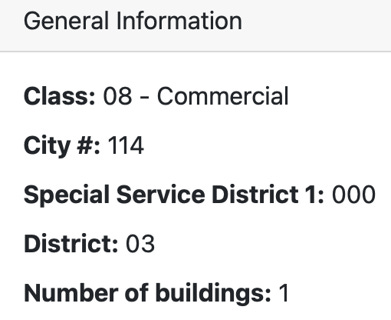

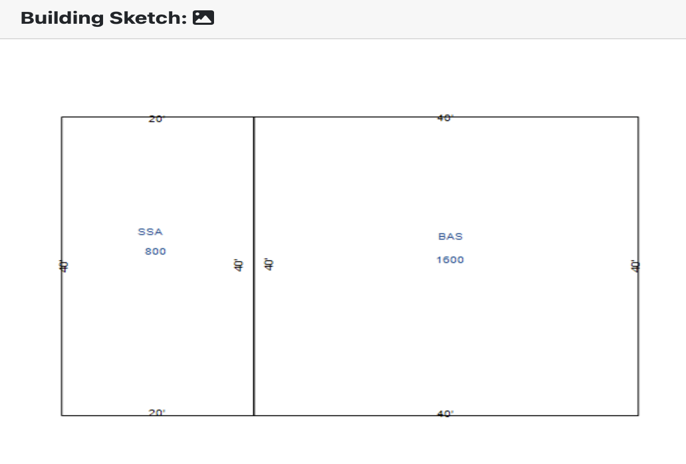
Public property records reviewed for this story describe 111 Theater Drive as commercial. The 2022 reappraisal materials list the parcel class as commercial, identify the improvement type as a garage, and show sales and base commercial areas, with no residential units or improvements listed.

Additional materials, including audio excerpts, internal communications, and party and DNC rules, were also part of the package supporters say was before the body. Taken together, the record described to members was enough to support a governance decision about fitness for office, even if it was not designed to answer every public argument that came later.
By the time most Democrats encountered this story, the public argument had already expanded to include side allegations, personal grievances, and broader narratives about secrecy and factional abuse. The narrower case supporters of removal describe was colder than that: more procedural, more documentary, and, in their telling, more limited.
Multiple sources also said the Treasurer was given opportunities to resign before the matter reached a final vote. This is an assertion that goes to how supporters of the process say the party initially tried to handle the matter. In that telling, the confidentiality surrounding the grievance process was not only about protecting the institution. It was also about giving the party room to deal with a serious internal dispute without inflicting maximum public damage on someone who had served in a high-profile party office. Whatever its intended purpose, that protective rationale did not survive once the dispute broke into public view.
What did survive was the narrower theory itself. Even as the public fight rapidly expanded far beyond it.
If the grievance materials describe the case, interviews with members who supported removal reveal something just as important: convergence.
Across interviews, members who supported removal described the same basic decision in remarkably similar terms. One that was a records-based question grounded in what they believed had been put before the body, not every allegation that later surfaced publicly and not a referendum on the Treasurer as a person. In their telling, it was a governance question, not a moral referendum.
One longtime East Tennessee committee member described it this way, “We did not vote on gossip or other issues, just the law.”
Another member, speaking from a different part of the state party structure, described the same frame from a different angle saying the Committee “agreed to this statement” and “agreed to stick by the rules of the TNDP bylaws,” adding that members followed “established procedures, bylaws and expert advice.”
Those descriptions matter because they are consistent.
They do not describe a chaotic or improvisational process. They describe a body acting, in its own understanding, within a defined institutional lane. An understanding grounded in records, process, and authority under the bylaws. In that telling, the question was not whether every allegation circulating in public had been proven beyond doubt. It was whether the case presented (centered on residency, voting-address history, and timeline issues) was sufficient, under party rules, to determine fitness for office.
That distinction shows up repeatedly in how yes-voters describe the decision.
The State Executive Committee, in their telling, was not operating as a court. The motion itself says the party was not making a legal finding. And multiple members who supported removal emphasized that same point in interviews: this was not a criminal proceeding. It was an internal governance decision about whether one of the party’s officers could continue to serve.
Just as important is what these members did not do.
They did not keep expanding the frame outward to every side allegation or every grievance that later became part of the public fight. They kept returning to the narrower case reflected in the motion and the materials they say were before the body.
Even where accounts differed on tone or detail, the pattern held. Across interviews, supporters of removal consistently described a bounded decision: a defined record, a defined standard under the bylaws, and a defined question about fitness for office. That alone does not make them correct. But it does help explain how they understood the vote.
If supporters of removal were mostly describing one kind of decision, interviews with members who opposed or were uneasy with the Treasurer-removal motion suggest that at least some of that opposition was operating under a different standard.
Not every dissenter explained their vote in the same way. But a recurring pattern emerged in conversations: some members appear to have approached the motion less as a bounded governance question under the bylaws and more as a matter of reasonable doubt, personal trust, and concern about the fairness of the process itself.
Glenda Whitfield, president of the Tennessee Federation of Democratic Women, offered one of the clearest on-record windows into that divide.
Whitfield said she was not part of the grievance process and did not recall reviewing its evidence. She also said she and Gerri Fox (who cast the Tennessee Federation of Democratic Women’s vote on her behalf) had a lengthy discussion and were in agreement on the vote. But Whitfield did not describe her opposition primarily as a point-by-point rebuttal to the narrower records-based case supporters of removal say was before the body. Instead, she described it in terms of principle: she said she chose to “hang my hat” on innocence and on “reasonable doubt” that the allegations were true.
Fox, for her part, said she stood in “complete agreement” with Whitfield’s explanation.
If the question before the Executive Committee was a narrower governance question, then the decision was institutional and procedural. But if the question became whether every allegation had been proven to something closer to personal certainty, it begins to look more like a trial.
They were not the only dissent-side voices I heard from. But they offered the clearest on-record example of a pattern that surfaced repeatedly in interviews: at least some opposition appears to have been shaped less by a direct rebuttal to the narrow records-based theory than by trust in the Treasurer and discomfort with the process itself.
That does not make dissent illegitimate. It does help explain why people voting on the same motion may not have believed they were deciding the same question at all.
The internal divide helps explain the public one. Abney’s own actions also complicate the public narrative that took shape afterward.
By multiple accounts, she voted to enter executive session. She also voted to release the adopted motion, the same motion that set out the formal basis for her removal. Those are not incidental procedural details. They place her inside the same process she would later publicly attack.

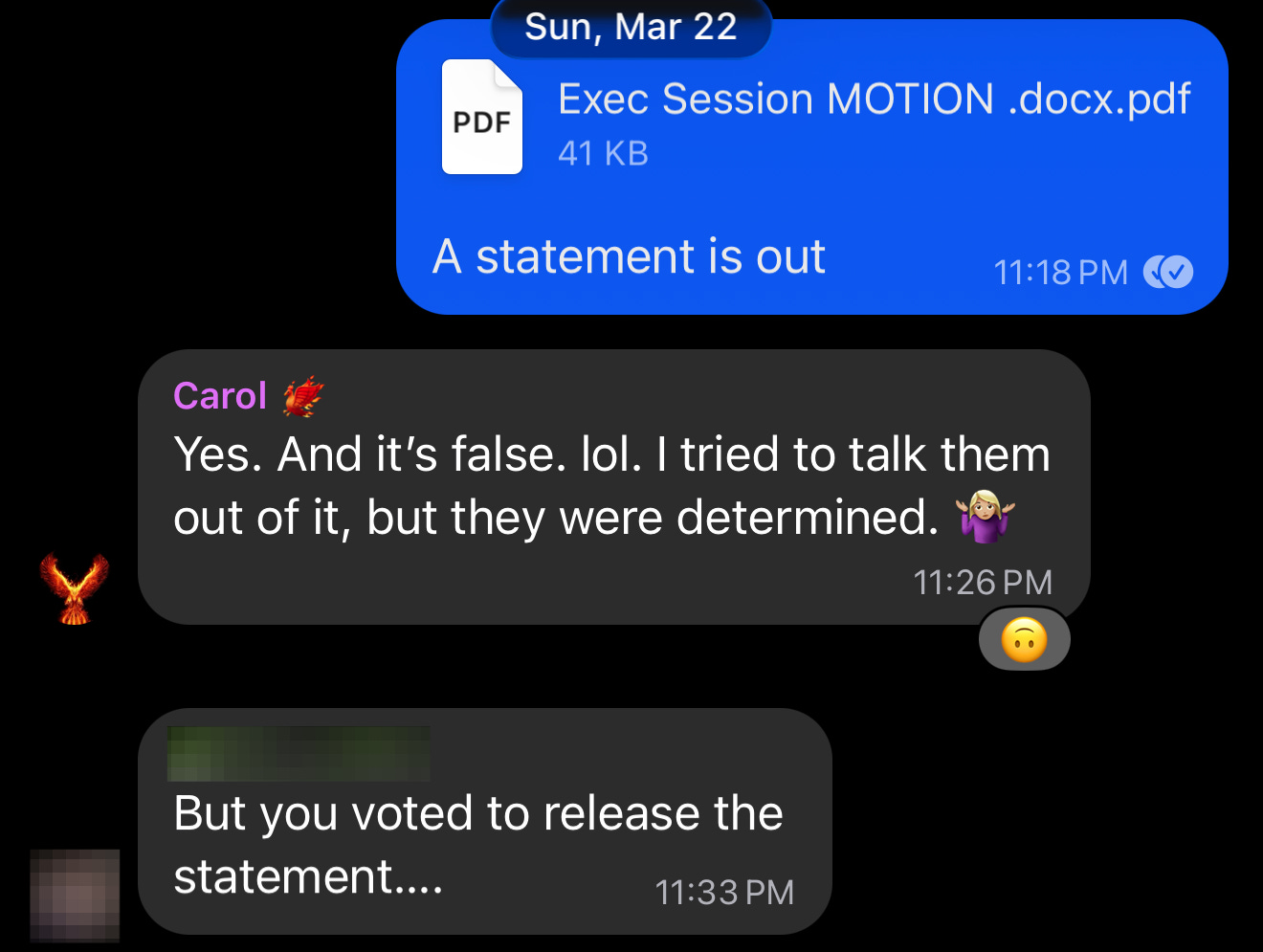
That does not resolve the dispute or answer every question about fairness, process, or what happened inside the room. A member can support entering executive session and later object to how that process was used. But voting to release a statement without moving to change it, narrow it, or object to its contents makes it far harder to later argue publicly that the statement itself was fundamentally incomplete, misleading, or false.
In the days after the vote, Abney did not keep her public defense confined to the motion’s narrow basis. She helped push the dispute outward. Away from residency, voting-address history, and fitness for office, and toward secrecy, suppression, failed leadership, rural exclusion, and a broader claim that the state party had abused process behind closed doors.
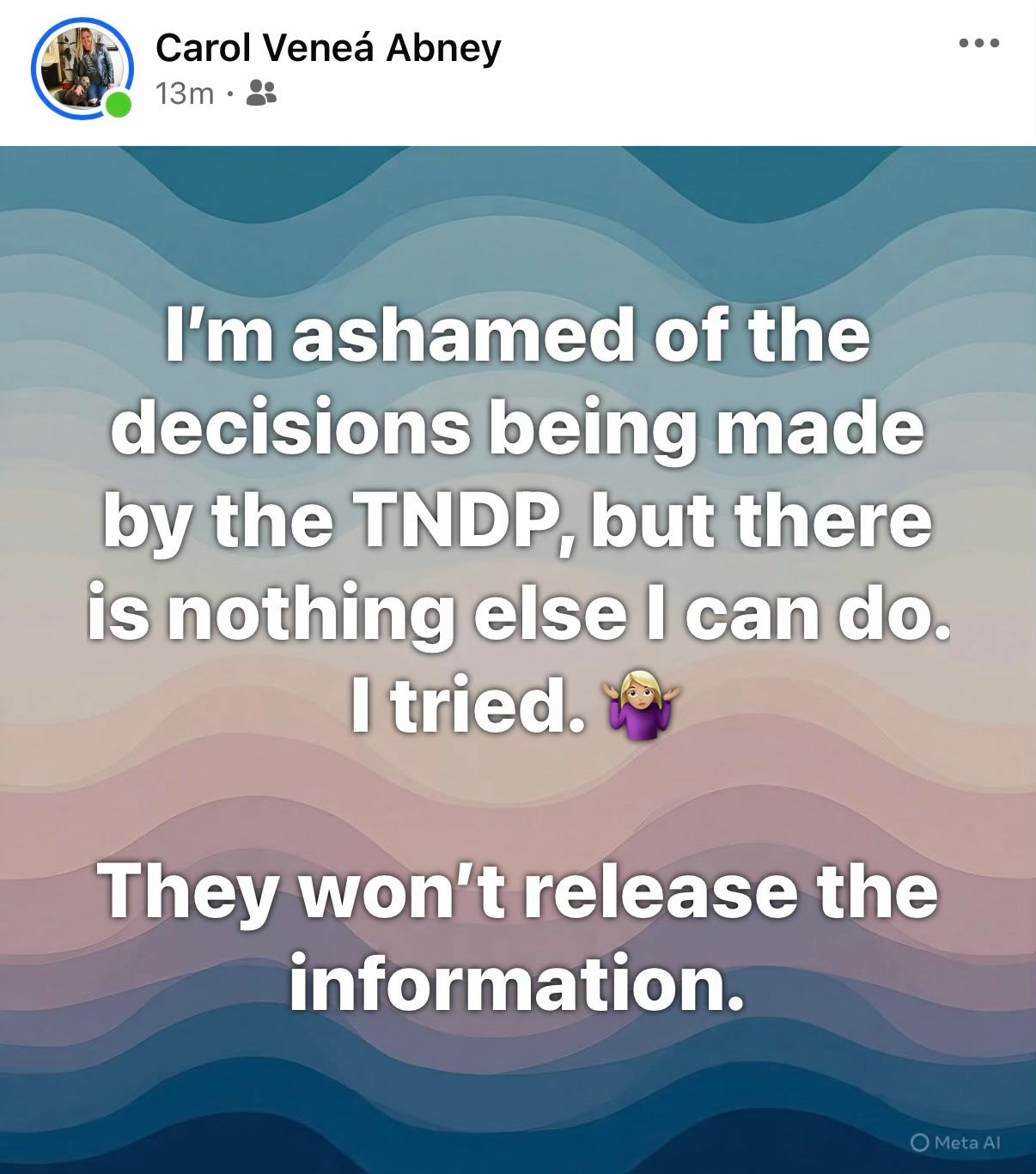
That does not prove the underlying case against her or invalidate every objection she raised. But it does make the cleanest public version of events harder to sustain: the one in which secrecy appears solely as something done to her, rather than something she also participated in at key moments. That complication also helps explain why the public fight that followed did not stay narrow for long.
What began, at least formally, as a dispute over residency, voting-address history, and fitness for office was soon overtaken by a much larger argument about secrecy, retaliation, anonymous accusations, factional abuse, loyalty, trust, and whether the Tennessee Democratic Party can handle serious internal conflict without turning it into public damage.
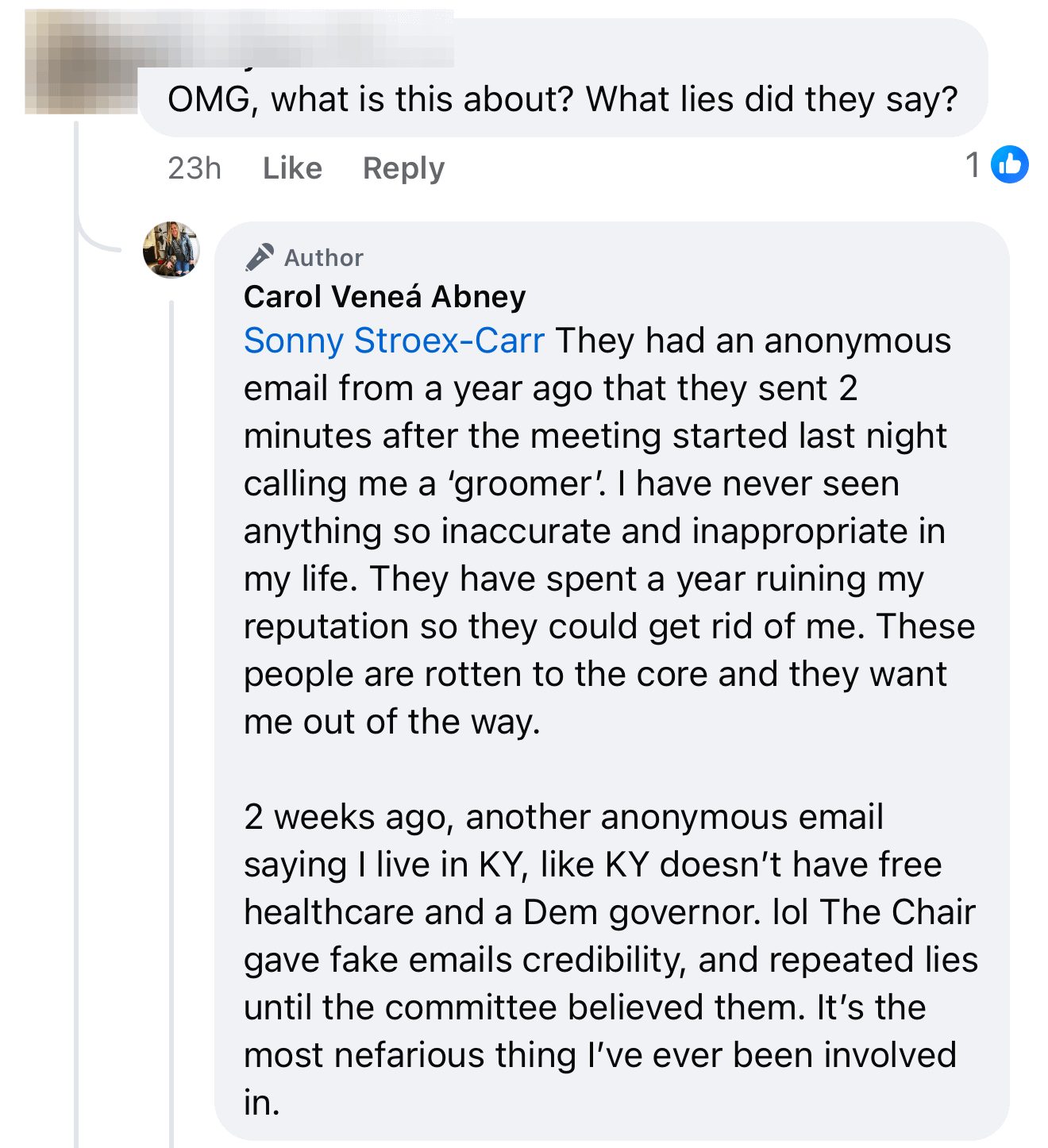
Those themes did not come from nowhere. They gained traction because they connected to concerns people already had. But they were broader than the question the Executive Committee says it acted on.
That widening changed the terms of judgment. A narrower governance dispute asks readers to stay with records, timelines, bylaws, and institutional standards. A broader narrative about secrecy and betrayal invites them to evaluate the situation based on trust, relationships, and prior assumptions.
That is how a bounded governance dispute gets surrounded until it is no longer the only thing people think they are being asked to judge.
Once the dispute moved into public, the vacuum around it was not filled evenly.
Members of the Executive Committee were operating under the same confidentiality expectations and process constraints, and by multiple accounts those limits were understood and agreed to as part of the grievance process and executive session.
But once the matter escaped the room, people did not respond to those constraints in the same way. Some continued honoring them, limiting what they said publicly and deferring to the formal statement. Others helped shape public understanding more directly through selective framing, partial disclosures, public commentary, and social media narrative.
That asymmetry mattered. While some participants remained inside the limits the body had adopted, others were effectively litigating the conflict in public, sometimes portraying that silence as evidence of secrecy, evasion, or bad faith.
In practice, that created an uneven informational environment. The people most willing to speak outside the constraints of the process had the greatest influence over how the story was initially understood, while those who continued to follow them were slower to respond and more easily cast as withholding information.
Materials reviewed for this story and multiple source accounts also indicate that, as the dispute widened, it extended into efforts to identify the source of the original complaint. That did not clarify the question before the Executive Committee. It showed how far the conflict had already moved. Away from a bounded internal governance matter and toward a broader struggle over information, exposure, and control of the public narrative.
That dynamic did not determine every aspect of the backlash. But it shaped the terrain on which it unfolded. In a vacuum, the version of events that travels first, and most freely, usually defines the terms of the debate. Here, those terms expanded well beyond the question the Executive Committee says it actually decided.
The Tennessee Democratic Party did not just make a difficult internal decision. It made one, then failed to define it clearly enough to keep others from defining it first. That is the real damage here.
Whatever people think of the March 16 vote itself, the formal basis for the action was narrower than the public fight that followed. The motion described a specific theory about residency, voting-address history, and compromised fitness for office. But that is not the story many Democrats across the state ended up reacting to. They reacted to a much broader fight about secrecy, retaliation, loyalty, distrust, and whether the Tennessee Democratic Party can handle internal conflict without turning it into public self-destruction.
Those stories overlap. They are not the same.
Until the party confronts that gap directly, this fight will keep doing what it has already done so well: burying a real internal dispute beneath a louder, uglier, and more politically useful war over what people think it meant.
If you’ve made it this far, will you help keep Project Battleground going by subscribing or becoming a supporter?
I wasn’t involved in this process. I don’t take office until after the August election. But I very much appreciate the detail put into this. I’ll be following your writing in the future.