
Habeas What?
I didn’t actually know what one of our oldest rights really was— until Trump started talking about taking it away.

I’ve been told more than once that I know just enough to get myself in trouble - and just little enough to act a fool.
We live in a time when it feels like we’re all supposed to be experts in everything, all the time. One minute it’s economic policy - someone’s breaking down the impact of tariffs like they’ve got a PhD in trade economics. The next, it’s foreign affairs and papal history - suddenly, everyone you know has an opinion on the election of the new pope, and you’re sitting there remembering that you too have watched The Two Popes on Netflix and convinced yourself you understood how conclaves work.
We’ve all learned to fake comprehension. We hear a phrase we recognize. We see the headlines. We register the buzzwords. We know it sounds serious, so we nod along. We tell ourselves we get it. We might even repeat it to someone else later - confidently, as if we really understand.
And then we move on.
File it away. Forget about it.
Another headline. Another crisis. Another thing we didn’t really stop long enough to wrap our heads around.
I’ve learned to catch myself when I do that.
And I’ve learned that knowing the headline is not the same as knowing the truth.
Information without understanding is nothing more than noise.
And that the longer we let ourselves bounce from one headline to the next without stopping to dig deeper, the easier it becomes to miss what’s actually happening right in front of us.
Because the truth I’ve found about moments like this - when something that feels big, dangerous, and serious starts bubbling up in the background of our news cycle:
We have a choice.
We can keep scrolling.
We can let it wash over us like every other breaking alert.
Or we can stop.
Step back.
And try to make sense of it before the moment passes us by.
That’s what I tried to do when I saw the first headlines about Trump’s inner circle - Stephen Miller, once again at the center of the chaos - talking about suspending the writ of habeas corpus.
I recognized the term.
I knew it was probably a concept I should know.
But if you had stopped me right then and asked me to explain what it actually meant?
I couldn’t have done it.
Not really. Not beyond the vague sense that it had something to do with locking people up without charges.
I knew it mattered.
But I didn’t know why.
I don’t think I’m the only one.
Because most of us - myself included - have been living with the quiet, dangerous belief that our rights are unshakable. That the guardrails of democracy are too strong to break. That our legal protections are untouchable, no matter who’s in power.
But the more I learned, the more I started to understand just how fragile those protections really are. And just how easy it is to lose them - not all at once, but inch by inch, the moment we stop paying attention.
The Legal Protection Most People Don’t Think About
There are a lot of legal terms that get thrown around in politics - obstruction of justice, executive privilege, due process. But habeas corpus usually doesn’t tend to make the list. It isn’t buzzy. It doesn’t trend. And if you’re like me, you probably haven’t heard it much outside of a textbook or a courtroom drama.
It sounds like something you’d memorize for a high school civics test, circle the right answer, and forget about by the next period. It sounds distant. Technical. Academic. One of those Latin phrases that only matters to lawyers or constitutional scholars.
But it couldn’t be more real.
Because habeas corpus is the thing - the thing - that stops the government from locking you in a cell, throwing away the key, and refusing to tell anyone why.
It’s what requires the government to do more than just accuse you or suspect you. It’s what forces them to prove it. To bring you in front of a judge. To explain what law they say you broke. To let you speak. To let you defend yourself. To let you be seen - not just as a problem to be dealt with, but as a person with rights.
It is, in every meaningful way, the foundation of freedom.
Because without it, none of the other rights we talk about really hold up.
Freedom of speech means nothing if you can be disappeared for saying the wrong thing.
The right to a fair trial means nothing if you’re never given one.
The right to protest, to organize, to challenge the government - none of it matters if the government can silence you with nothing more than a closed door and a pair of handcuffs.
Habeas corpus is the line.
And it’s not a loophole. It’s not a technicality. It’s not some procedural formality that gets in the government’s way. It’s a constitutional promise - one of the oldest and most important we have.
We didn’t invent it here in the United States. We inherited it from centuries of English law, stretching all the way back to 1215, when a group of English barons forced King John to sign the Magna Carta. It was there, in that document, that the idea first took root: that no one - not even the king - has the unchecked power to imprison people without cause.
When the framers of the U.S. Constitution wrote the foundation of our government, they didn’t leave habeas corpus to interpretation. They didn’t bury it in the fine print. They put it right there in Article I, Section 9, as clear as day:
“The privilege of the writ of habeas corpus shall not be suspended, unless when in cases of rebellion or invasion the public safety may require it.”
That’s the rule.
And that’s the only exception.
Not political pressure.
Not bad polling numbers.
Not the inconvenience of having to explain yourself in court.
Rebellion or invasion. That’s it.
And even then, the bar isn’t just high - it’s supposed to be almost unreachable.
The government has to show that suspending habeas corpus is the only way to protect public safety.
That it’s temporary.
That it’s narrowly applied.
That it’s absolutely necessary.
But America has never been particularly good at treating lines like they can’t be crossed.
Because we have crossed it.
Not once.
Not twice.
But four times in our history.
And every single time, the government told us it was justified.
That it was necessary.
That it was temporary.
Every single time, they told us it wouldn’t happen again.
But it did.


The first time was in 1861, when Abraham Lincoln - facing the looming collapse of the Union - suspended habeas corpus during the Civil War. His administration feared that Confederate sympathizers in border states like Maryland might turn against the Union and cut Washington, D.C. off entirely. The Chief Justice of the Supreme Court at the time, Roger Taney, ruled against Lincoln, arguing that only Congress had the power to suspend habeas corpus. Lincoln ignored him. Congress later passed legislation to retroactively authorize what he’d already done. To this day, historians debate whether it saved the Union or marked one of the most dangerous expansions of presidential power in American history.
The second time was in 1871, when President Ulysses S. Grant suspended habeas corpus to crush the Ku Klux Klan’s reign of terror in the South. After the Civil War, white supremacist militias waged violent campaigns to keep Black Americans from exercising their newly won rights. Grant used the suspension to arrest and prosecute Klan members who were murdering, intimidating, and terrorizing communities across the South. Many praised it as a necessary defense of civil rights. But even that righteous cause carried risks - because once you set the precedent that constitutional rights can be suspended, it becomes easier to reach for that power again.
The third came in 1901, when President William McKinley suspended habeas corpus in the Philippines during America’s brutal colonial occupation. After claiming victory in the Spanish-American War, the United States refused to recognize the Philippines’ declaration of independence. Filipino revolutionaries resisted, and the U.S. military responded with overwhelming force. McKinley’s suspension of habeas corpus gave the military free rein to detain anyone they suspected of being part of the resistance - no trials, no hearings, no legal protections. Most Americans didn’t even notice. It was happening thousands of miles away, in a place most people back home had never seen and never cared to understand.
And the fourth time was in 1941, after the attack on Pearl Harbor. The U.S. military placed Hawaii under martial law, suspending civilian courts and replacing them with military tribunals. But the real legacy of that moment wasn’t in Hawaii. It was on the mainland, where more than 120,000 Japanese Americans - most of them citizens - were rounded up, stripped of their rights, and forced into internment camps. They were accused of nothing. They were charged with nothing. They were simply labeled a threat because of their ancestry. The Supreme Court upheld it. The government apologized decades later. But the apology didn’t change the fact that lives had already been destroyed.
Every time, the government claimed it was temporary.
Every time, the government said it was for the greater good.
Every time, civil liberties were sacrificed on the altar of “national security.”
And every time, it became just a little easier to imagine doing it again.
Because that’s the thing about crossing a line: once you do it once, it’s easier the next time.
And the next.
And the next.
That’s the backdrop. That’s the history that sets the stage for what we’re seeing right now - the slow but deliberate reopening of a playbook this country has reached for before. A playbook that has always carried a cost. And once again, we are watching that playbook being dusted off and held up for all of us to see.
What makes this moment different isn’t that it’s happening in secret. It’s that it isn’t. They aren’t hiding it. They aren’t softening it. They aren’t whispering about it in back rooms or slipping it into fine print. They are saying it out loud. They are telling us exactly what they’re thinking about doing, and they have been building toward this moment for years.
If you’ve been paying attention, you’ve seen it. From the earliest days of Trump’s first campaign, they started using the language of invasion. Not immigration. Not border management. Not a broken legal system in need of reform. But invasion - weaponizing that word over and over again until millions of people started to believe that desperate families fleeing violence and poverty were actually an organized force coming to destroy the country.
Because if they can sell that lie - if they can convince just enough people that migration is not a legal or humanitarian challenge, but a military threat - they believe they can unlock the one constitutional exception that lets them suspend habeas corpus. It doesn’t matter that the courts have rejected that argument. It doesn’t matter that even Trump-appointed judges have ruled that the legal definition of invasion doesn’t apply to unarmed people crossing a border. They aren’t trying to win in court. They never have been.
The real strategy isn’t legal victory. It’s chaos. It’s overload. It’s narrative warfare.
Steve Bannon said it plainly years ago: “Flood the zone with shit.”
And that’s exactly what they do. They throw so much into the public square - so many lies, so many provocations, so many extreme policies floated all at once - that they overwhelm the public’s ability to process any of it. They make it impossible to tell what’s theater and what’s real, what’s the actual threat and what’s just noise designed to keep us spinning in place.
And the media? It takes the bait almost every time. Not because journalists are bad at their jobs, but because the system is designed to chase the loudest story, not the most consequential one. Outrage fuels clicks. Chaos drives ratings. And by the time fact-checkers and legal analysts have done the work to explain why something is unconstitutional, the damage is already done - because the public has already moved on to the next fire.
That’s the play. Not to win one big fight, but to wear us out with a hundred small ones. To make the unthinkable feel inevitable by saying it over and over again until people either accept it or tune it out.
We’ve seen this strategy work before. The Muslim Ban. Family separation. Remain in Mexico. None of those policies started with legislation. They started with memos. With bureaucratic orders that hit families and communities before anyone had the chance to stop them. By the time the courts caught up - if they ever did - the harm was already done.
And that’s exactly what’s happening now. They’ve laid the rhetorical groundwork. They’ve framed immigration as an invasion. They’ve tested the legal boundaries. And now, they’re daring the rest of us to keep up.
Because they know most people won’t.
Not because they don’t care, but because they’ve already been flooded with so much crisis and chaos that it feels impossible to hold onto any of it long enough to fight back.
That’s the real danger here. Not just that they’re talking about suspending habeas corpus, but that they’re daring us to get tired before they make their move.
And if we’ve learned anything from watching them operate, it’s that they don’t need to win in court to win in practice.
They just have to move faster than accountability can catch them.
And they’ve done it before.
If you’re imagining this will start with a dramatic announcement - a speech from the White House, a flood of headlines declaring that habeas corpus has officially been suspended - you’re imagining the wrong fight.
Because that’s not how this happens.
It starts much quieter than that. It starts with a memo. A policy shift. A quiet directive buried deep inside a federal agency most people have never heard of, much less paid attention to. It starts with someone changing the paperwork, reclassifying migrants in ways that sound technical but carry devastating legal consequences.
It starts when agents on the ground - Border Patrol, ICE, DHS - are told they don’t have to process people the way they used to. They don’t have to send them in front of a judge. They don’t have to explain the legal grounds for detaining them. They don’t have to wait for hearings or follow the slow wheels of due process. All they have to do is move them faster. Push them through the system. Out of sight. Out of reach.
And if you’re thinking that sounds familiar, your instinct is right— they might already be doing.
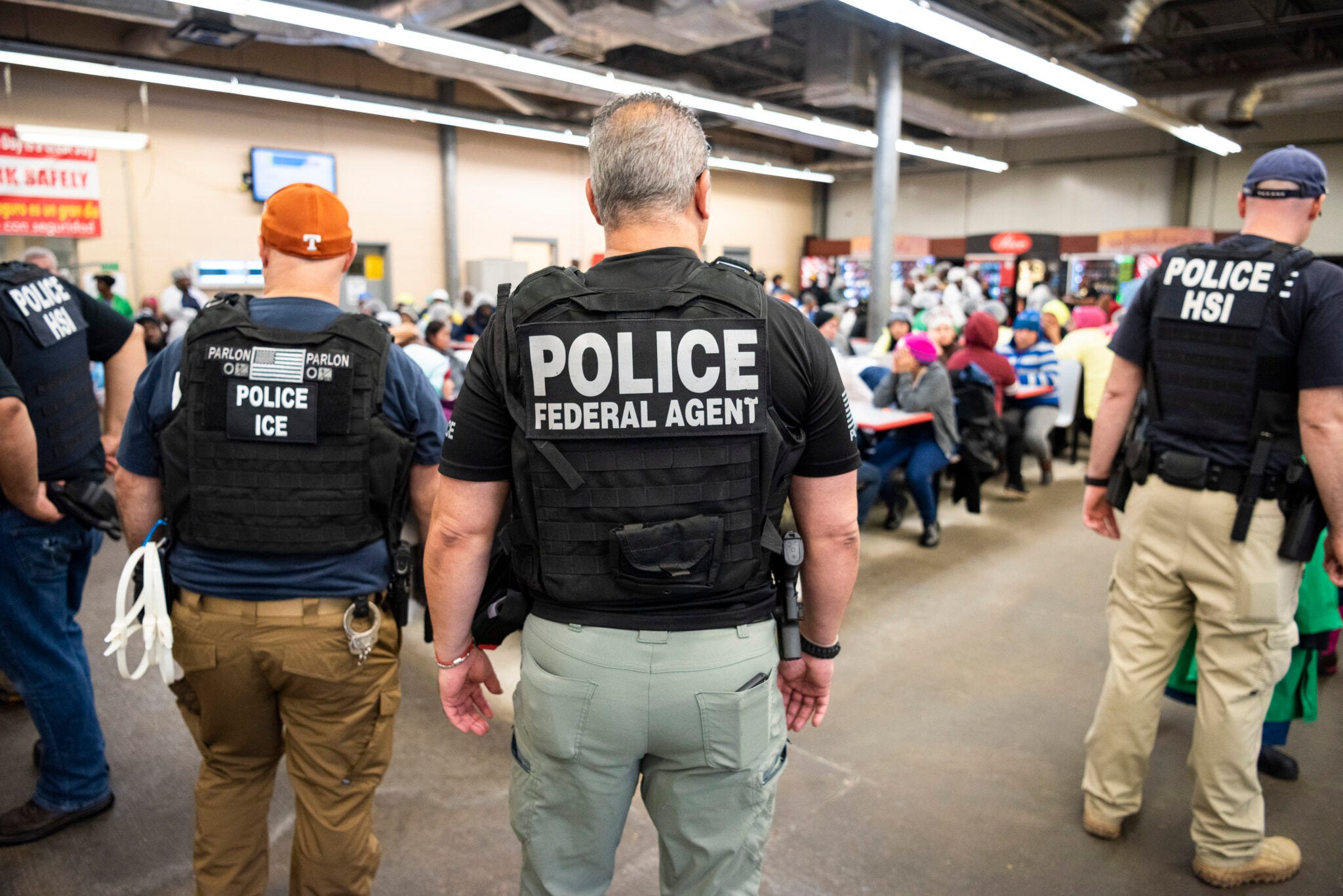
Because just a few months into Trump’s second term, that machine is in full speed.
This isn’t a brand new policy. It’s the next chapter of a playbook they started writing eight years ago. The Muslim Ban. Family separation. Remain in Mexico. Emergency border declarations. Court fights they didn’t care if they lost - because the damage had already been done long before the rulings came down.
What Trump is floating now isn’t a new idea. It’s a more aggressive, more shameless extension of what they started last time. And they’re daring the courts, the press, and the public to try to keep up.
Because they know most people won’t.
Once they lock in the narrative - once they have convinced the country that the southern border is a battlefield and the people crossing it are enemy combatants - they won’t need to rewrite the Constitution. They’ll just move faster than anyone can stop them.
And it might not stop with migrants.
First, it is the people crossing the border.
Then, it might be the people who help them - the lawyers, the clergy, the advocates, the neighbors who show up.
Then, it will be the journalists who dare to report the truth.
And eventually, it will be the political opponents who try to stand in the way.
That’s how this always spreads.
Slowly at first.
Then all at once.
And by the time the rest of the country realizes it isn’t theoretical anymore,
the damage will already be done.
We like to tell ourselves we’d recognize the moment democracy dies.
We like to believe we’d feel it happening.
That it would be so obvious, so unmistakable, that we couldn’t possibly miss it.
We like to think there would be alarms blaring.
That we’d see the line being crossed and rush to stop it.
But that’s not how this works.
The danger isn’t that Trump will walk out onto a stage one day and declare himself above the law. The danger is that he already did that once - and people let him.
The danger is that the next time won’t come with breaking news banners or emergency broadcasts. It won’t come with a giant announcement or a constitutional crisis everyone agrees to call by its name.
It’ll come the way these things always come.
Quietly. Slowly.
Deliberately.
One more escalation. One more memo.
One more policy change that feels just technical enough to keep the media framing it as a debate instead of what it really is: a test.
And while they’re debating, while people are arguing about whether it’s legal or whether it goes too far or whether it’s really happening at all -
The system will already be shifting beneath our feet.
We are the frog in the pot.
And the heat is already rising.
We’ve been here before.
We know this pattern.
We’ve seen how it works.
And yet - here we are again. Standing at the edge of another moment that feels both unthinkable and entirely too familiar.
And I wish I could tell you it’s all just noise.
I wish I could tell you they won’t really do it.
That this is just political theater.
That nothing will actually come of it.
But that wouldn’t be true.
Because even if this really is just another shot fired in the endless barrage of chaos - even if this is just one more headline in the flood - they’ve already done damage.
Real damage.
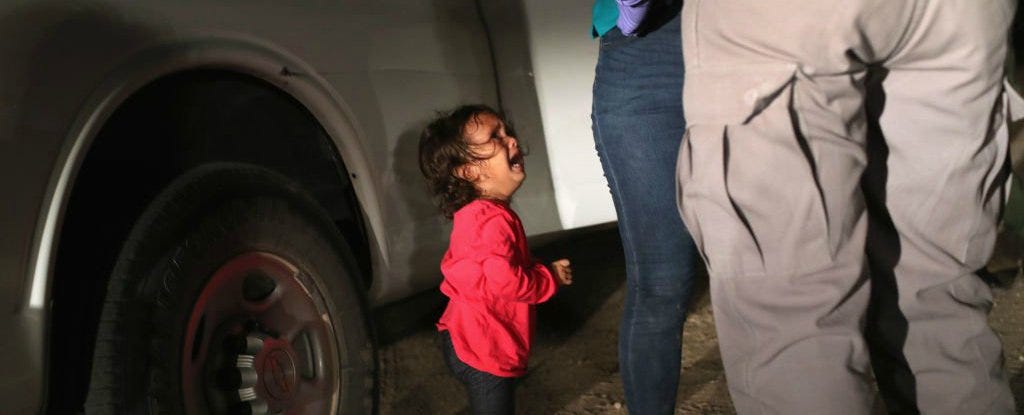
Right now, families are already being uprooted.
Right now, people are already being detained.
Displaced.
Dehumanized.
Erased.
Right now, communities are already living in fear.
And it’s happening here.
Not in some far-off dictatorship.
Not in a chapter of history we’ve already closed.
Here. Now.
Again.
We’ve all said: it couldn’t happen here.
But it is…. And the only question left is what happens next.